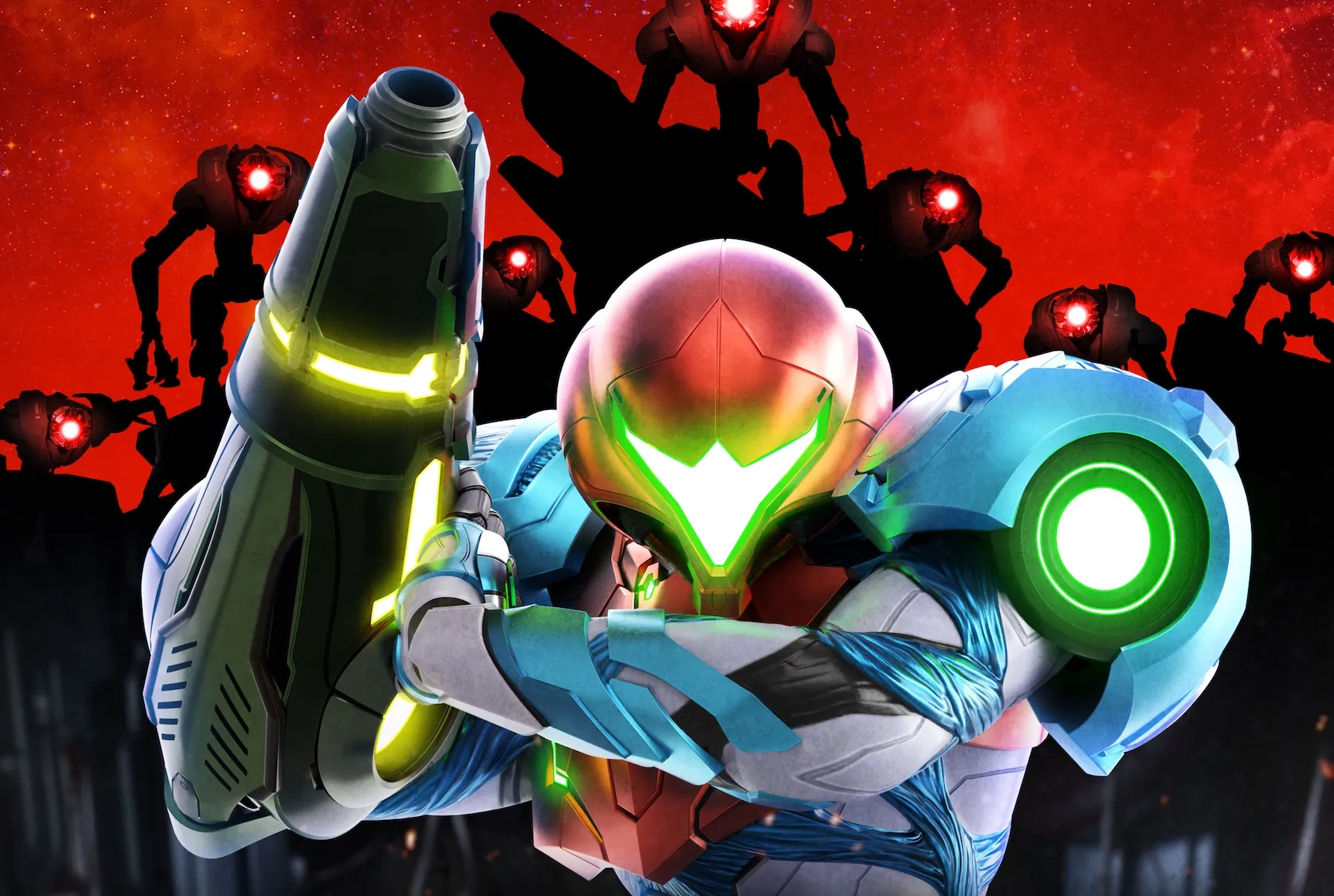
Samus returns in her first 2D adventure in well over a decade.
What Is It? Metroid Dread is a 2D action-platforming game released in 2021 for the Nintendo Switch. The game follows Samus Aran on another adventure in the familiar “Metroidvania” style: start without any special powers, slowly gain them back while exploring an unknown planet and fighting monsters the whole way.
If you’ve played a Metroid game, or even a Metroidvania game, you know what to expect here. You get plopped down into a room as Samus with only her blaster, jump ability, and a slide. From there, you start exploring until you unlock new powers such as the morph ball, missiles, better primary weapon, bombs, and so on. Each of these powers allows you to explore new areas of the massive map, which is broken up into a handful of areas per Metroid tradition.
One newer ability Samus possesses in Dread is parrying. First introduced in Samus Returns, this is a major component of the game. There will be enemies throughout the game, on every screen or two, which come at you with a parry-able “glowing gold” attack. Connect at the right time and you will block the attack and open up the attacker to a one-shot kill (usually) which drops extra health and ammo. The game trains you to look for those gold glowing circles throughout because most of the boss fights lean into this as well. A few cannot be defeated without connecting on parries.
I don’t typically associate Metroid with “world class controls”, but combat and movement are silky smooth in Dread. Samus controls like a dream, especially once more of her moveset is unlocked. A phase-shift ability, in particular, completely changes combat encounters. The spin-jump takes some time to master, but you’ll be using it with ease by the end of the game. My personal Metroid nemesis, the grapple, is minimized here much to my delight. In short, it’s never felt better or been more fun to control Samus on her adventures.
Something I do associate with Metroid is exploration, and that is more of a mixed bag here. The game does not trust players to find their way a lot of times, instead choosing to attempt to direct them using locked doors and other gating tactics, often blocking you from hitting areas you’ve already explored for some amount of time. This extends beyond the typical “need a new skill to reach the next area” the genre always features, instead blocking off areas you’ve already visited seemingly to minimize the places you have to search when trying to figure out where to go next. As a core idea, I don’t hate the concept, but there are still a few spots players can easily get lost at and it is pretty frustrating to think “hey, I can go get that missile power-up I saw earlier now that I have the spin jump” only to find out that you can’t actually do that because the game is trying to corridor you in a specific direction.
Near the end, everything is open to explore and this is some of the most fun to be had in the game. Leveraging all of Samus’s skills and your own personal hide-and-seek acumen, finding health and missile capacity upgrades is a blast. Bonus points because doing so directly results in making the tough final stretch of the game easier. None of this is tedious because the game can be beaten in about ten hours, although mortals like me will likely require a few extra hours of trying a handful of particularly tough boss fights.
Speaking of which, this game features some of the best boss fights in the series’s history. I don’t really associate Metroid games with “groundbreakingly fun and innovative boss fights,” but Dread delivers. Some old favorites show up, but instead of relying on the fun in fighting Kraid again 40 years after his first appearance, the game actually puts together some very challenging, fun fights. The game adds a boss rush mode if you want to keep the good times rolling.
Finally, the “Dread” aspect of the game mainly comes in with guard robots called E.M.M.I. Without going into story spoilers, these robots patrol specific areas of the map and are unkillable by Samus until she finds a certain room within the area, destroys a repeat, familiar (and easy) boss, and then uses a temporary power up to take out the E.M.M.I. for that area. Having an unkillable enemy certainly adds tension to the game. You can use a cloaking power to avoid detection, although it has limitations, or you can simply make a break for it, attempting to escape the clearly-marked patrol areas. I did not like this aspect the first time I played Dread. I found myself more neutral on it the second time through. I don’t think it’s a negative addition to the game, I’m just not entirely sure what it adds to the fun.
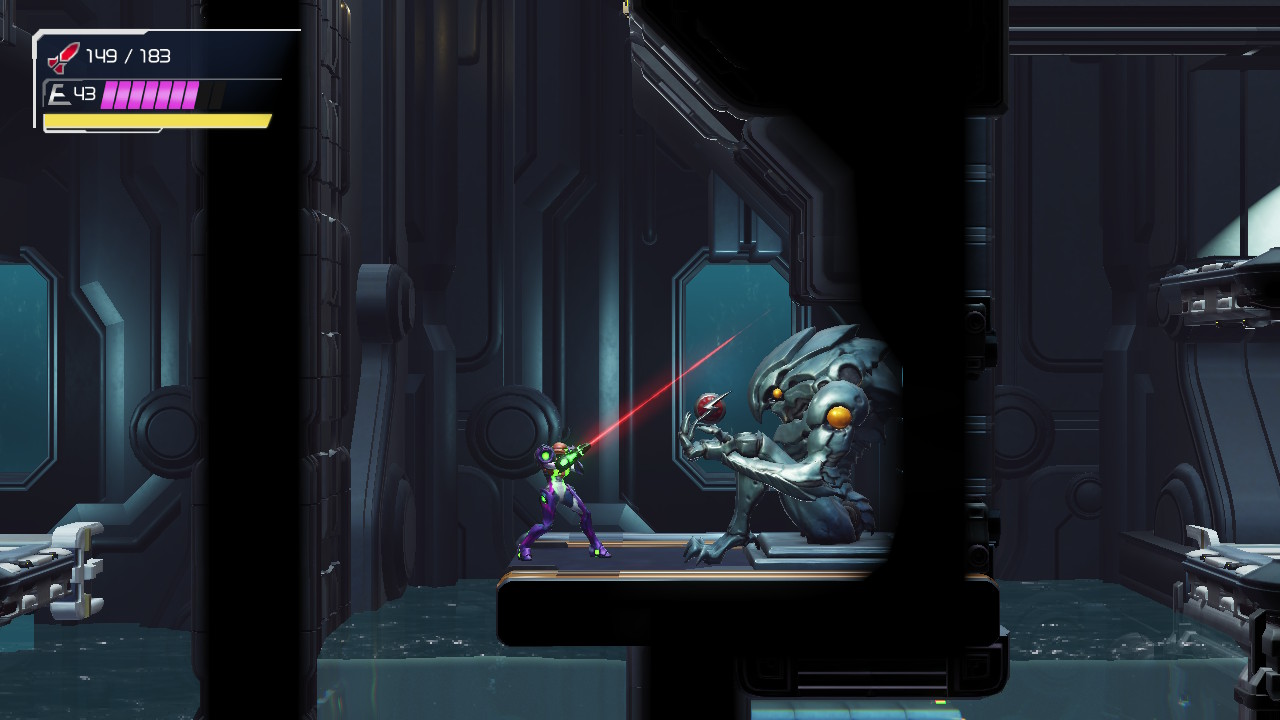
The Best Part: The controls. Most likely because there hasn’t been a new entry in so long, but playing older Metroid games it always felt like the genre has passed Samus by as far as the slickness of the controls. She was never as stiff to control as the Castlevania protagonists were, she was actually quite smooth for the era(s), but the last decade-plus have seen some buttery smooth controls in the genre. I’m delighted that Dread has Samus joining that crowd. By the end of the game you will be zipping around with ease, particularly using the spin jump and phase-shift ability to avoid late-game boss attacks which can take an unreasonably large portion of your hit points if they land. There are other games which are as good as this in the control department, but Samus has never felt better to control and that’s a wonderful feeling.
The Worst Part: The mixed bag of difficulty and hand-holding. This is a difficult game.The first time I played through, the final boss took my well over an hour. Other boss fights took me a handful of tries to get through. The E.M.M.I.s also provide some real difficulty in terms of navigating quickly or quietly to avoid the highly probable instant death that awaits if you’re caught. The rest of the game isn’t terribly difficult, but the bosses and E.M.M.I. sections make up for that. The game leans into the difficulty, the parry feature being another example of that, but then tries to limit exploration and funnel players into the direction of the next upgrade. It’s a very strange clash of styles which, ultimately, says “we want our players to have a difficult gameplay experience but we don’t think they will be able to explore on their own.” It is a mixed bag that gets worse when you consider how the tunneling the game forces on you fails on some notable occasions. Many other games in the genre solve this exploration problem in a much simpler way that is significantly more effective. Even Zero Mission with its broad strokes “go here next” beacon succeeds where Dread fails.
The Verdict: I missed out on Metroid games as a kid. Super Metroid was the one I definitely should have played, but I guess we never got to the rental store in time as I can’t recall ever bringing it home for a weekend to try out. I first played any Metroid game just five or six years ago, it was Super and I had a good time but I played it after playing a handful of modern Metroidvanias which skewed my expectations. I enjoyed what it offered, as I have with Fusion and Zero Mission since, but it felt like a dated series. A great, iconic series still worth playing today but, still, dated. Metroid Dread brings the series into the modern conversation in the genre and does so in style.
The more deliberate movement of the older games is gone and Samus absolutely flies across the screen in Dread. This opens up the game to having more fun, difficult boss fights with more demanding platforming mixed with the combat. The game manages to fold in this faster paced action while maintaining its core “this is still a Metroid game” aspect which is, obviously, vital to the series. It’s a wonderful mix that countless decades-old franchises have tried and failed to achieve.
As for potential downsides, the game can be a bit tough between the bosses and the E.M.M.I. sections which boil down to needing to learn the room layouts or just get lucky. There is an Easy mode, for those interested. Some people are surely going to be turned off by the emphasis on Samus’s parry move if they didn’t like it in Samus Returns. Finally, the tunneling/gating the game forces upon you can get annoying when you just want to go back and get that really obvious missile tank you couldn’t earlier but find the game has blocked that area off temporarily.
This replay confirmed that Metroid Dread is one of my absolute favorite Metroidvania games. I’ve played quite a few over the years, but the immaculate Metroid vibes combined with smooth, modern controls, memorable boss fights, and the classic Metroid power-up hunting results in an experience I was delighted to experience again, and will certainly return to down the line.
How to Play: Nintendo Switch*
*console played on for this review
Leave a Reply