
A uniquely creepy puzzle platformer, Inside remains fun over a decade after its initial release.
What Is It? Inside is a 2016 puzzle platformer from Playdead, the developers behind Limbo. “Limbo walked so Inside could run” is a perfectly fine starting point for understanding what Inside is and does, if you are familiar with Limbo. If not, let me explain…
You start Inside as a faceless child who finds themself in the woods. You quickly learn that everything is out to get you. Armed adults and attack dogs will be the first obstacles you encounter in Inside. Getting caught by anything is an instant death. Thankfully, the game has a generous checkpoint system so deaths aren’t too punitive.
As for gameplay, Inside allows you to move, jump, and grab. It’s a wonderfully simple system that would have worked on an NES controller. The magic of Inside lies in the depths of things the game allows within these incredibly simple controls.
The platforming portion of the puzzle platformer is fairly light. The most strenuous platforming you will do here is escaping from things chasing you, but even those are mostly structured so if you’ve set things up properly, you won’t be caught. There are a few underwater sections with especially smooth controls.
The real meat of the game lies in the puzzles. Without spoiling too much, you will be completing a variety of puzzles from pushing crates all the way through mind controlling other faceless human-looking creatures to do what you need. The variety and depth of these puzzles is where Inside’s gameplay truly shines.
Outside of gameplay, or maybe even including gameplay, the atmosphere is the star of the show. There is no dialogue, spoken or otherwise, so you are left on your own trying to figure out what is happening in this game. Being a child hunted by adults to the point where they kill you on sight is a startling experience. Things take off in wild directions from here, particularly in the game’s final act, but the muted color pallet, faceless humans, and basically every other visual in the game all feed into this intensely creepy atmosphere. You are left to fill in the gaps as you see fit, but the common thread is everyone who plays this game will want to help this character escape.
Inside will take about three or four hours to see the credits. There are fourteen special orbs you can find throughout the game if you want to 100% it, these are hidden in fun areas and offer a nice bit of extra environmental puzzling for those who want a bit more.
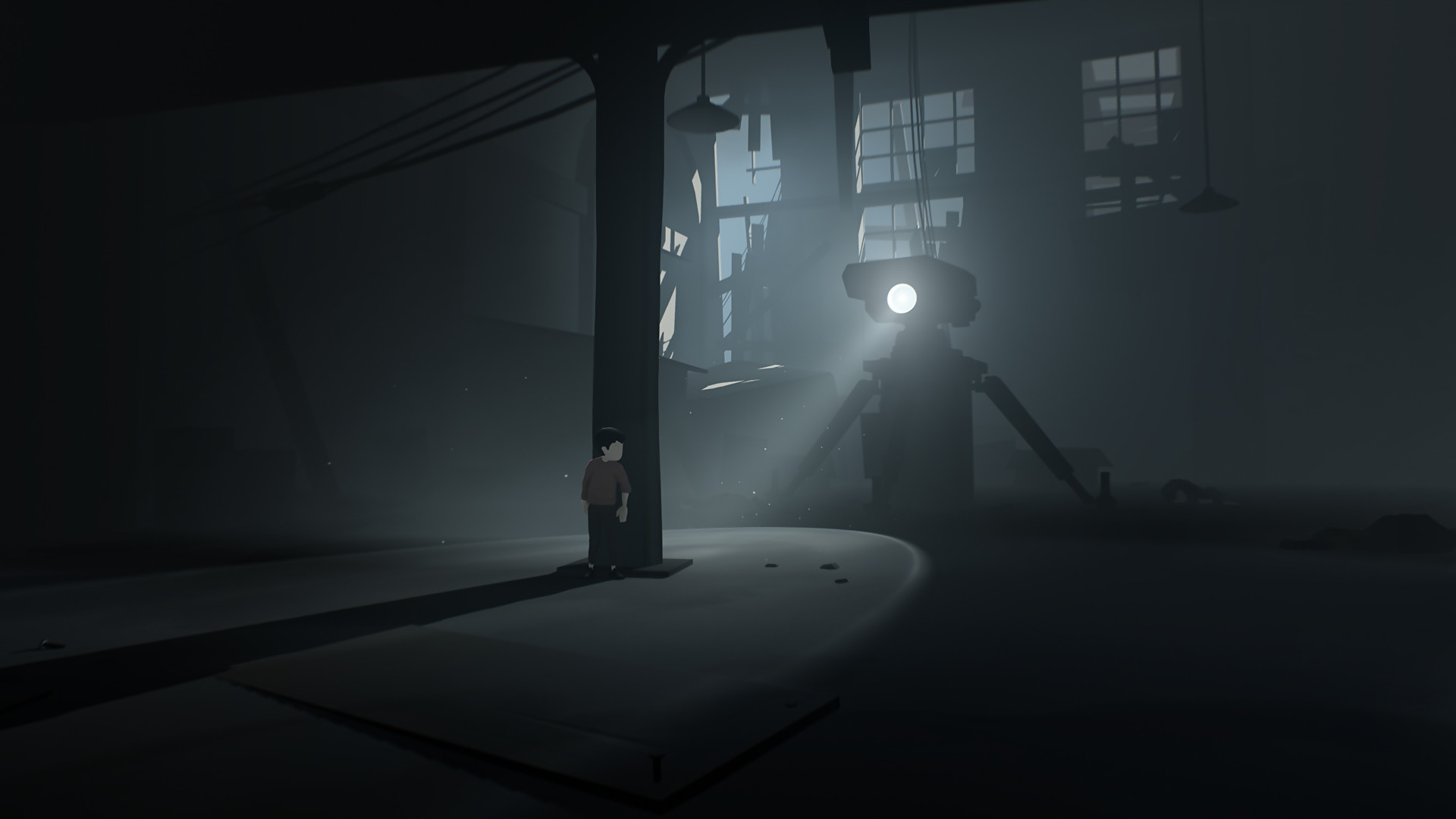
The Best Part: The tone the game sets from the start and never deviates from. You want to escape. You may not be sure why you want to escape, where you want to escape from, or who you want to escape from, but the player knows the entire time that they need to get away. All of this is conveyed through gameplay, there is no dialogue to be found. It’s a perfect example of “show, don’t tell” and is the main reason this game still holds up a decade after its release.
The Worst Part: They could have done a little more platforming. As mentioned above, much of the actual platforming here is actually tied to getting everything in the right spot. Draw a hunting dog far enough away from where you’re going so that it can’t catch you once you make a break for it, for example. I love the puzzle aspect here, I just think they could have supplemented it a bit with some more robust platforming sections.
The Verdict: Yes, Limbo walked so Inside could run, at least in my opinion. I enjoyed Limbo but didn’t love it, with a lot of that likely due to me being 15 years late to trying it. It was a game that clearly would have hit differently that long ago before highly stylized indie experiences were so common. Inside, on the other hand, absolutely stood out to me nearly ten years after release.
Much like Limbo, the atmosphere leads the way here. Everything you encounter pushes forward the question of “what the hell is going on???” You don’t get any definite answers in the game, but that’s just fine. The mystery and seeing where the game goes is the bulk of the fun. Strictly on the gameplay front, Inside offers smooth platforming with fun, inventive puzzles to solve. The puzzles take center stage and manage to thread the needle of being fun and not obvious, but also easy enough that a puzzle dunce like myself can solve them and momentarily feel smart for doing so.
Inside holds up well today. I was equal parts creeped out and intrigued from about two minutes into the game and that didn’t let up until after the credits rolled. The game does an amazing job of setting a specific mood from the start then continues to build on that while providing fun puzzle platforming to keep you moving across its brisk pace.
How to Play: PlayStation 4*, Xbox One, Switch, PC, macOS
*console played on for this review
Leave a Reply