Does this SNES shmup elevate above its unique marketing strategy?
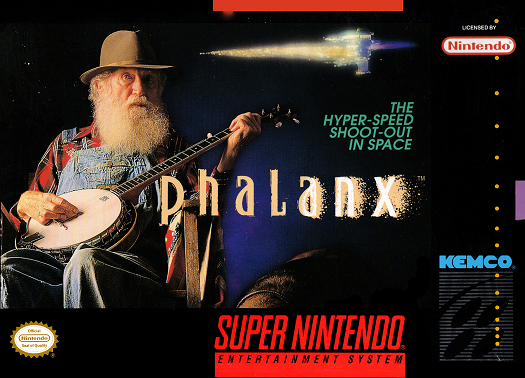
What Is It? Phalanx is a fairly run-of-the-mill horizontal space shmup on the Super Nintendo. Released in 1991, the most notable thing about it was its choice of cover art. The North American release featured a bearded, elderly man sitting in a rocking chair holding a banjo while a tiny spacecraft could be seen off in the distance behind him. This was a deliberate attempt to attract attention to the game which was entering a crowded genre. Is there anything worth playing today?
The game is a horizontal shooter spread across eight levels which have you controlling a bland spaceship. In typical shump fashion, the game throws a non-stop barrage of enemy ships at you while also forcing you to avoid environmental obstacles. Levels end in boss fights and then you move onto the next. You are given five lives with each death, after your three-hit life bar is depleted, respawning you at the same spot. Exhaust all of your lives and you can use one of three continues to start back at the beginning of your current level.
You start with a standard, weak gun but upgrades are found throughout levels. These feature staples of the genre such as ricochet bullets, homing missiles, lasers, and so on. You can also find handy P drops which will restore one of your health points. You can hold up to three different weapons at one, with the option to release one at a time to act as a power bomb of sorts. The specific effects depend on the weapon, but they are generally quite powerful.
Your ship can switch between three different speeds whenever you’d like. There is only one ship in the game.
The levels are not too long or difficult to start, with a gradual ramp up along the way. Since you actually get three hit points and can replenish them, this game is automatically more beginner friendly than most in the genre.
Phalanx is a “find a bunch of weapon power-ups so my ship is firing things in all directions without me really knowing about it” style game, so chaos ensues on the screen most of the time. To the game’s credit, the vast majority of the game shows zero slowdown on original hardware. There are some specific parts which slow to a crawl, but the majority of the game runs quite smoothly, especially for an SNES shmup.
The game looks okay. The color palette is muted with a lot of grays and browns showing up. Nothing bad, just nothing terribly memorable.
A run through the full game can be completed in under a couple of hours and, given the forgiveness with HP, I suspect many genre veterans will be able to do just that on their first try. Newcomers will likely take a few tries.
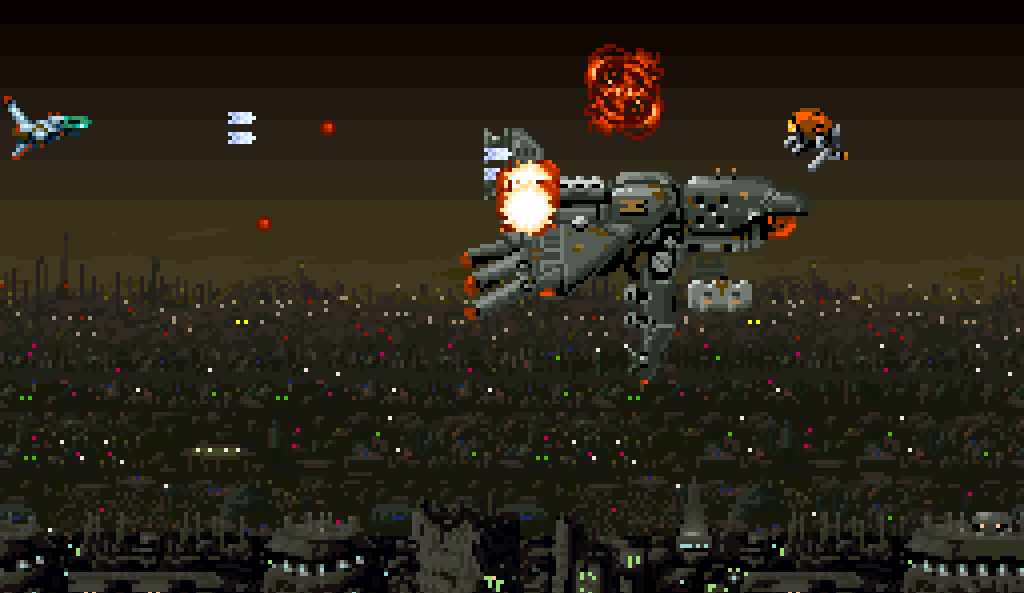
The Best Part: The game’s use of environmental and physical obstacles. Some shmups ignore this aspect completely, but I always enjoy when the game makes you pay attention to your surroundings while you’re trying to blast away dozens of ships. There are some early parts which train you to make use of your ship’s speed modes so you can get by, these add a nice twist to simply blasting away enemies the whole game.
The Worst Part: The game doesn’t do anything particularly noteworthy. Everything from the levels to the enemies, bosses, weapons, and graphics could all be classified as “serviceable.” The rogue marketing and cover art really speak to how unspectacular the game is. Super R-Type and Axelay didn’t need this kind of gimmick.
The Verdict: Everything about Phalanx is just fine. I had a good time playing the game, no qualifiers needed. The game runs smoothly and offers a fun horizontal shmup experience on one of my favorite pieces of video game hardware ever. That is a worthy accomplishment.
However, the game doesn’t do anything special. It is best suited for newcomers to the genre, but the marketing novelty of it has made its cost jump to more than double that of Super R-Type or Gradius III, among others. If you’re playing Any Way You Can, your breadth of options is huge and there is nothing about Phalanx to make it worth recommending over dozens of others.
Phalanx’s North American marketing team knew what they were doing. Slapping a memorable cover on a completely routine game is getting people (well, at least one person; me) to play the game 35 years later. Kudos on some wonderful marketing, less so on a shmup that is hard to recommend to anybody other than diehard genre completionists.
How to Play: Super Nintendo*, GBA, X68000
*console played on for this review
Leave a Reply