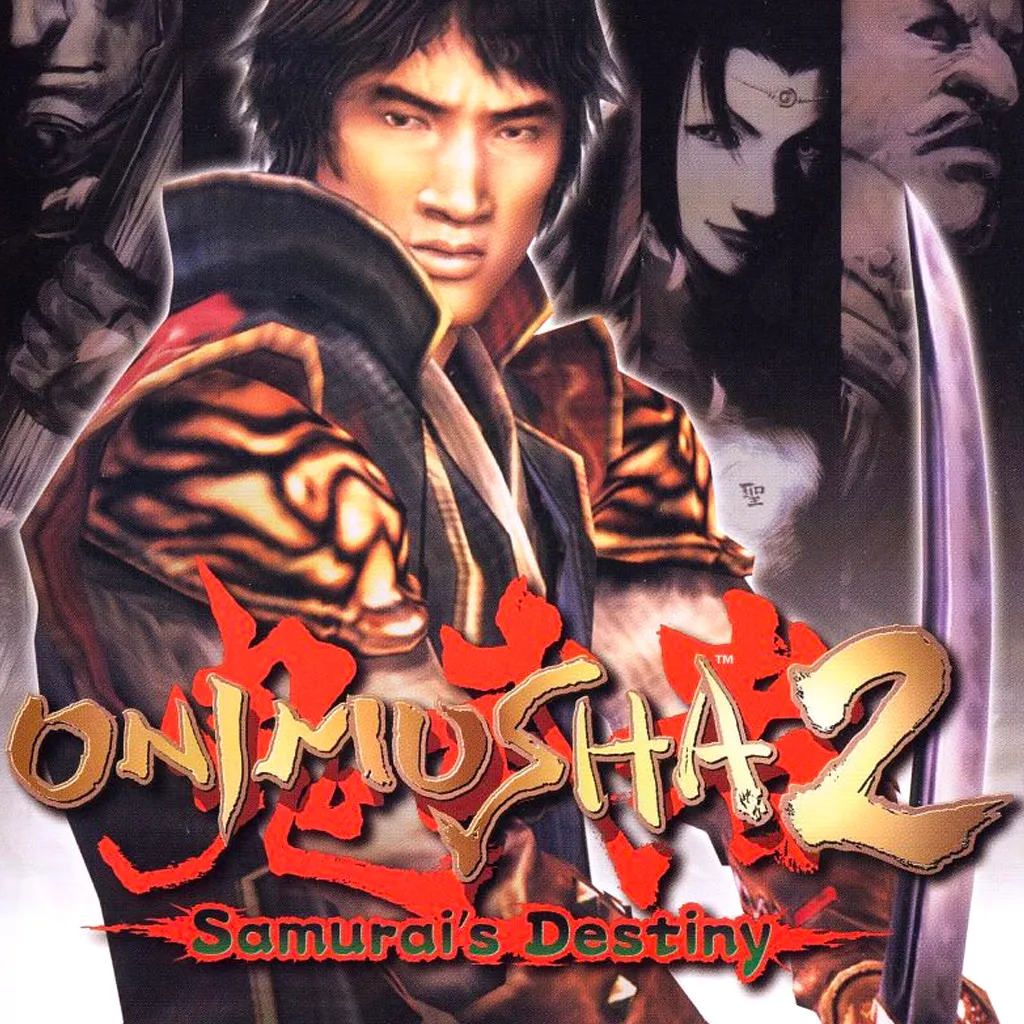
Is the classic medieval Japan action-adventure game worth a revisit today?
What Is It? Onimusha 2 places you in the footsteps of Jubei Yagyu as he returns home to find his village decimated by Nobunaga Oda. Jubei unsheathes his sword and sets off on a quest for revenge. The quest takes him to Imasho where he meets some potential allies and gets closer to Nobunaga by way of collecting a set of powerful orbs.
Onimusha 2 was released in 2002 and was developed by Capcom. Despite being a PS2 game, and the second in the series on the console, it copies the tank controls seen in many of Capcom’s PlayStation 1 games such as Resident Evil. As someone who plays a lot of tank-controlling PS1 games, I found the controls here to be great. They are smooth and responsive, essentially a really great version of a bad control scheme. Be warned, however, if you are not a fan of the style.
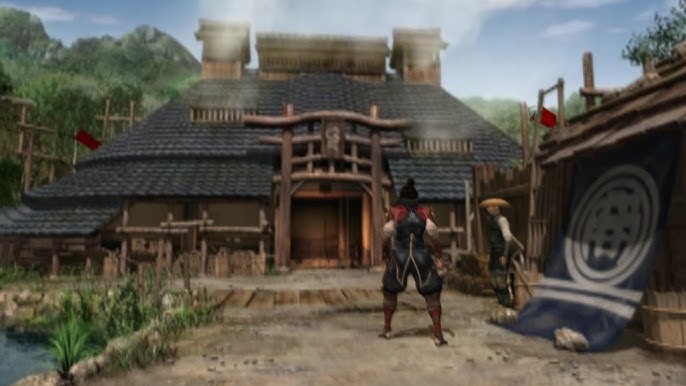
The core loop of the game is to reach a new area, find a new weapon, defeat a boss, and gain its orb. To the game’s credit, this cycle only repeats a few times over the seven to eight hour runtime before the game changes things up. You will navigate Jubei around areas with pre-rendered backgrounds, something I’m always a fan of.
The initial portion of the game uses Imasho as a hub town. You will need to talk to various people to advance and may also partake in the gift mechanic. This allows you to offer gifts to certain NPCs and gain favor from them. This can open up the chance for these characters to help you later, side quests where you get to play as them, or even turn them against you down the line. This is a fun system that I didn’t engage with too much, but it certainly adds depth and replayability to the game.
As Jubei, you will wield various weapons that you unlock over the course of the game. Each has its own unique style and magical power. The basic sword can strike quickly and deal thunder damage while the enormous sledgehammer is slow to hit but is powerful and features a strong area-of-effect magical attack. Each of the core weapons, along with the armor, are upgradeable throughout the game. There are a few optional weapons you can find such as ranged weapons or more powerful swords. My only nit here is that the control scheme changes a bit when you switch to a ranged weapon, it isn’t bad, just takes a bit to get used to. To its credit, it does this to allow for better aiming as the game doesn’t feature auto-lock.
Combat also features a powerful counter move called “Issen.” You know if the developers give a counterattack its own name, it’s going to be good. A successful Issen move will allow you to one-hit kill an enemy and chain those together to take out a bunch of enemies on screen at once. As an added bonus, enemies killed this way will drop health powerups which are extremely valuable in Onimusha given the scarcity of healing items.
Healing orb drops are rare, but magic refills and upgrade points are dropped frequently. Both are vital as many tough enemies will be significantly easier to take down with magic attacks and stronger, upgraded weapons. You will also be able to consume larger orbs which charge up a special attack mode where Jubei is invincible for a short period of time and deals massive damage.
There are only a handful of unique enemy types, but they don’t ever really get stale over the course of this short game. Boss fights are memorable, but they do reuse them a bit much for my tastes. The game looks good, with the cutscenes in particular holding up quite well.
The Best Part: The overall combat system. The mix of weapons, including some really fun ones which are optional, is great. Add in the orb drop to fuel the powerful magical attacks and upgrades, and you have a fun, tight loop which doesn’t get stale over the course of the game.
The Worst Part: The difficulty. I started on Normal difficulty and thought it was mostly fine for a while. The enemies were hit-sponges, but nothing too crazy. The first couple of boss fights were tough challenges, but I overcame them after a few tries. I forget the exact spot I switched to Easy difficulty, but I was doing poorly enough that the game was suggesting I make the switch after each of my deaths on this particular boss fight. I have no qualms with playing a game on Easy mode if Normal is more difficult than I would like, but the Easy mode here is a bit too simple. I think I died twice in the second half of the game? This isn’t a massive issue, I could have just gotten better and continued on Normal, but it definitely felt like this game didn’t have the right difficulty balance for me.
The Verdict: Onimusha 2 is my first exposure to the series. Given the recently announced new entry in the series, combined with Capcom being on an absolute roll lately, I wanted to see what the series offered to consider if I wanted to jump into the new game.
This was a game that I enjoyed the more I played. At first I was confused by there being tank controls on PS2, then wondering if I was going to have to play out a whole friendship thing through the gift system, or spend a lot of time talking to people in town like an RPG. Once I got past all of that and hit the stretches of pure gameplay, I had a good time. So much so that I know I would have a much better time if I replayed the game and did engage in that early, optional stuff so I could see more of what the game offers. Ideally, that hook gets you the first time through, but that was not my experience.
The most obvious downside of this game is that tank control haters need not bother. It is wild to see them in play here, although it was an early PS2 game so there are potentially way more games like this than I know about. The upshot is that they work well, but they still won’t be for everybody. Elsewhere, the friendship/gift system isn’t really fully explained as to how much it can play into your game. I finished the game with only seeing 50% of things (this is an exact number, given to me by a post-credits scorecard) because I did not appreciate how important this aspect was.
I had a good time with Onimusha 2. It’s hardly essential in my book, but it was a fun action-adventure game and I can easily see how people could get drawn into it more than I was.
How to Play: PlayStation 2*. Remaster: PlayStation 4, Switch, Xbox One, PC
*console played on for this review
Leave a Reply