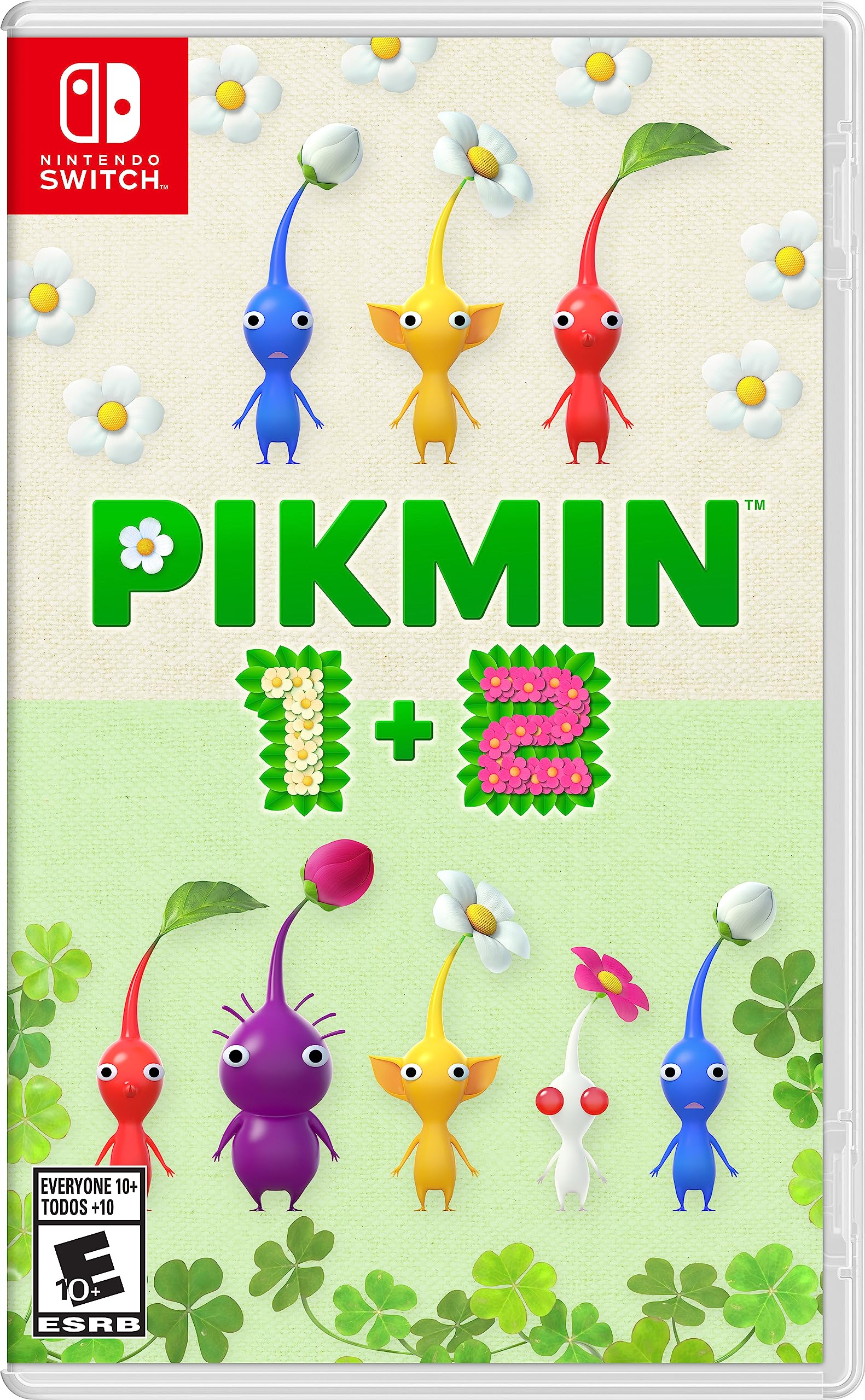
The original Pikmin games were a Nintendo-ization of the real time strategy genre. Did Nintendo pull it off?
What Is It? Pikmin are tiny alien creatures which are eager to follow commands of stranded visitors from other planets. They will carry whatever you want, breed in massive quantities, attack enemy creatures, and even die by running through fire or drowning. Devoted, adorable, idiots.
Pikmin 1 & 2 is a Nintendo Switch release which contains the first two Pikmin games, originally released on the GameCube. The new release changes a few things, but those details aren’t terribly important.
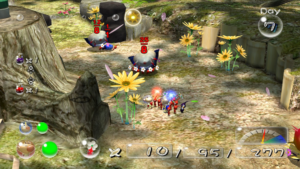
Both games have the same basic gameplay. You will recruit and spawn new Pikmin then they will follow you around as you try to find items to help you escape the Pikmin’s planet. You can bring up to 100 Pikmin with you at a time and you will be commanding them to attack enemies, break down barriers, build bridges, and carry things back to your ship. There are numerous different colors of Pikmin, each with their own strengths. Blue Pikmin swim, yellow are lighter and can be thrown higher, red are all-around workers, etc…
You get the gist of it. This is an RTS game, you set out with your selection of Pikmin types and try to discover, defeat, and collect enough stuff to move onto the next stage. You do this in day increments with a limited amount of time per day to explore and return to your ship. This all holds true for both games, now to the differences…
Pikmin 1 really doesn’t go much beyond that initial premise. The game has a hard limit on the number of days you have to retrieve enough ship parts to escape the planet (30 days). This hard limit makes the game stressful, especially for new players. I was absolutely scrambling the last few days to get all of the required parts for earning the “you actually get you leave” ending.
Pikmin 2 scraps the day limit, allowing you to take as many days as you want to explore. The overarching goal is to earn enough credits to repay your boss’s debt. The biggest change in this game is the addition of underground areas. Entering one of these turns off the daylight mechanic and you will have as long as you want to complete all levels of the underground. This gets tricky as you have no way to spawn or retrieve additional Pikmin once you enter one of these areas. You will have to work through many levels with the 100 you bring in, although there are a few spots where you can transform some of those 100 into different colors for situational help.
Pikmin 1 is a better game, in my opinion. I’m not a big fan of the strict number of days you get, and the Pikmin AI is really awful, they will often walk into water and die or fail to make it around simply corners, but I think the underground sections of Pikmin 2 are bad enough that it negates all of the other improvements it offers.
The Best Part: Streamlined, adorable RTS. This is a fun genre of game that is often overwhelming by how many things you need to juggle in, well, real time. Nintendo did a great job of simplifying the genre into something that is significantly more digestible than others out there. That isn’t to say the game is too simple or without challenge, just that it strikes a great balance of accessibility and challenge.
The Worst Part: Pikmin 1’s Pikmin AI. They are truly dumb which makes you spend precious time carefully guiding them through certain areas instead of doing the fun stuff. Pikmin 2’s underground dungeons. These are way too long and really don’t add much interesting to the game.
The Verdict: Pikmin 1 & 2 is a nice re-release of these two games which are both worth playing today. They are, perhaps, not the most streamlined version of Pikmin out there at this point (I’d vote for 3, but I’m not yet done with 4), but they are a very fun Nintendo-ization of a genre which typically has a high barrier to entry.
How to Play: Switch. Originals: GameCube
Leave a Reply