Arcade games are fun. Arcade games have mostly fallen by the wayside as far as mainstream video games are concerned. What gives?
Let’s start by vaguely defining what an arcade game actually is. We’ll get into some of the history behind it below, but for now we can say that an arcade game is typically a short game which incentivizes you to play it repeatedly. There are a bunch of different ways to achieve this, from providing high scores to beat, secrets to unlock, skills to master, or really steep difficulty which forces you to learn through retries. Alternatively, some games simply provide an extraordinary fun, small experience that you want to replay countless times.
That’s a pretty simple concept. The game must be good enough to make me want to spend hours experiencing the same handful of levels repeatedly. How did the industry start developing these types of games, why did they move away, and what is the draw of them for gamers today?
A Brief, Wildly Incomplete History of Video Games
The first popular video games were arcade games. They shipped in large cabinets and required users insert coins to operate them. This industry grew into a nearly ubiquitous childhood experience of a certain era: going to the local arcade and dropping pounds of quarters into machines for hours on end.
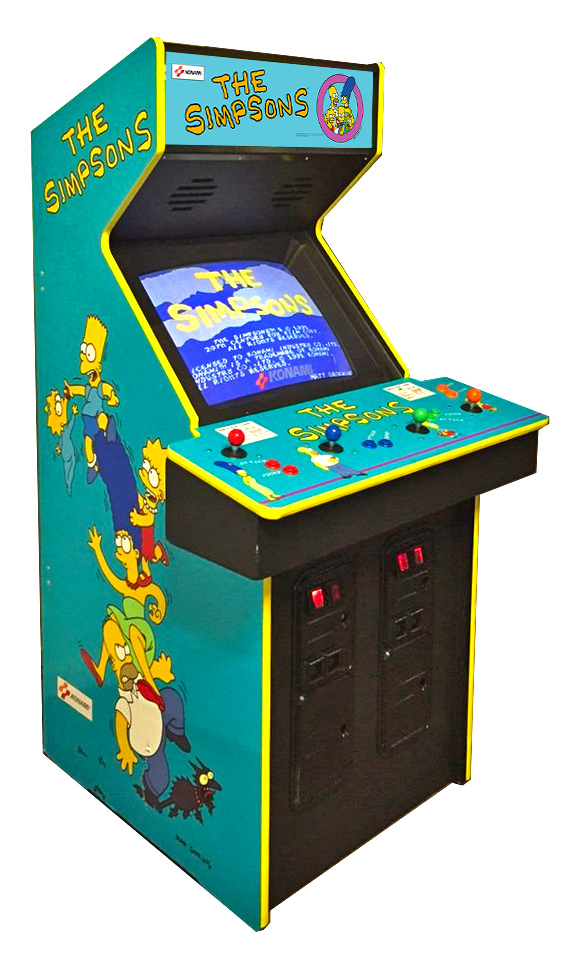
These games took on multiple forms over the years. The earliest versions were simply games with repeating, or at least extremely similar, levels which got more difficult with each successive round. Think Pac-Man, Donkey Kong, and Space Invaders. That would expand out in interesting directions as companies discovered more ways to get people hooked. Co-op brawlers were massive in arcades with classics like X-Men, Teenage Mutant Ninja Turtles, and The Simpsons allowing you and a few friends to beat up endless waves of nameless bad guys while controlling some of your favorite cartoon characters. Racing and shooting (rails and shmups) games were also quite popular: games that could be enjoyed one round at a time and entice players to do it all over again immediately afterwards. Fighting games mostly rounded out the lineup, allowing for a unique “beat the champ” style experience as a line would form to dethrone the winner of the prior game.
As the gaming industry attempted to crack the home market, it made sense that many of the games would be inspired by the arcade staples which came before them. Many early home console titles were short, meant to be played in one sitting even if that took an hour or two. They were inspired by games with the primary purpose of getting people to feed in as many quarters as possible. This resulted in many shorter games with large difficulty spikes and would eventually lead to the term “Nintendo hard” becoming a source of stress for many Gen X’ers across the world.
The trend eventually took on a slightly modified shape in the 16-bit era as many games were being produced with the goal being to get people to rent them over and over again from their local video store. Many of the same ideas held: games that were seemingly short and simple enough to beat in a weekend, but with some steep difficulty which made that one-weekend rental dream impossible.
None of this, of course, is to say that longer, multi-session experiences didn’t exist in this era. RPGs, Metroids, Super Mario Worlds, and plenty of other games were intended to be played across multiple weekends instead of one, why else would they let you save your progress? Or feature some truly goofy password systems.
As technology advanced, games could deliver more unique content over many more hours than these original arcade-leaning games. Everyone of a certain age remembers their first time playing Grand Theft Auto III. You could go anywhere? Steal any car? Shoot anything? The doors were blown off in ways that even the earlier, 40+ hour JRPGs could not with their pre-rendered backgrounds.
More traditional single player games eventually followed down a similar path. Can’t you see Sly Cooper as a 2D side-scrolling stealth platformer in the 16-bit era? Wouldn’t Ratchet & Clank make a great rails shooter? The turning point had arrived and the focus from roughly the early ‘00s on was about providing lengthy experiences instead of shorter ones intended to be replayed dozens of times.
Value of Games
One point I think is important to lay out as we frame this discussion is how you define value.
I am not a big fan of this, but the industry seems to have coalesced on the definition being something like this:
The amount of entertainment hours you get per dollar spent.
I don’t like this because I often have a much better experience playing a really fun 12-hour $60 game than I do playing a 30-hour game of the same price. The entire “time is money” mindset has ruined a lot of things in my opinion. There is some legitimate benefit in considering how long something will entertain you as it relates to the cost, but I strongly disagree with it being the end-all, be-all of value metrics in the gaming space.
Arcade Games Today
Throughout the growth of the Narrative-Focused Single Player Experience, a few bastions of the arcade experience remained for a while.
Sports games are a good example. There were literal arcade sports games such as the NBA/NFL/FIFA Street titles and various extreme sports series, but also the more traditional Madden and NBA 2K games offered fun by way of simply playing a game. Over time, however, even these would fall by the wayside. The actual arcade titles mostly stopped existing at all while the traditional games leaned into microtransaction-heavy online modes or long-running offline modes which emphasized building a team or player over time.
Some fighting games followed a similar path as Street Fighter’s single player experience turned into a massive story mode with an interactive 3D world to run around in to progress things. The arcade shooter genre mostly dried up as well, from shmups to traditional aerial combat games, a small fraction of these are released today compared to their ‘90s heyday, and very, very few are from big name developers.
None of this is to say the arcade experience isn’t available in today’s gaming. On the literal side of things, many smaller devs are delivering games which enthusiastically throw back to older eras. Scour Steam for any length of time and you’re sure to find countless games which fit the bill.
There are also some smart evolutions of the arcade experience. What is a good roguelite if not an arcade experience with a gradual progression wrapped around it like a comfy blanket? Something like Slay the Spire or Balatro also offer a more bite-sized experience with modern twists.
Mainly, though, I believe that the modern arcade videogame experience is found in online play. Many online games, particularly the most popular shooters and fighting games, offer 5-15 minute matches. These are nothing else if not the modern version of sticking a quarter in an arcade machine and seeing if you can beat the kid who has won 20 straight matches as Zangief on the Street Fighter cabinet. The monetization has changed, but the entire point of these online-focused games now is the exact same as those ‘80s arcade games: getting you to want to spend as much time playing the same core experience over and over.
That mostly covers the multiplayer, true arcade side of things, but where are the 90-minute, single player, home console games tied to major IP and/or from major developers? The answer goes back to the definition of value. Given ballooning development costs, it seems wildly irresponsible to release a $60+ game with a one hour playtime and hope players like it enough to play it a dozen times trying to beat high scores or find small secrets. Even a “smaller” effort like this year’s God of War Sons of Sparta came in with a $30 price tag simply because it was a 2D Metroidvania. The game takes about 20 hours to hit the credits. What chance does a true throwback arcade experience stand in this gaming environment?

My Argument For Arcade Games
Until very recently, I might not have had much of an argument to make. I had, for the last half decade or so, been fully enthralled by that sweet, sweet Narrative-Focused Single Player Experience. There are truly some of the greatest media experiences of my lifetime available in this videogame form. I can’t recall a movie or show which hit me as hard as The Last of Us Part II. The massive scale of the fights in God of War are things I’d been watching in movies for years, but to get to experience and participate in them with a controller? Phew. Uncharted let you play out Indiana Jones fantasies. The list goes on and on.
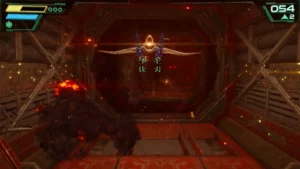
Recently, however, I found myself playing games with a shorter experience. This came to a head with the Star Fox Switch 2 remake. The game, based on the N64 title I was familiar with but far from a master at, can be beaten in little over an hour. I accidentally landed on the good ending my first time through. This meant there was no modern gaming reason to see any more. No trophies to collect. No better, alternative ending I missed out on. The only reasons to play more were to see the handful of levels I missed the first time through and see what challenges I could complete. The weirdest thing happened after I reached all of those other levels: I kept playing. I would start a run just to see what kind of high score I could get or try to decide on my favorite path through the game. That’s a lot of words that ultimately boil down to me replaying the game simply because it was fun to do so.
What a novel concept: a single-player game that is so fun that I want to see the credits a dozen or so times within two weeks of getting it. This, of course, isn’t entirely fair to longer games. Star Fox isn’t more fun than every longer game out there. I have replayed CupHead yearly since first discovering it in 2020, for example, and cannot come close to finishing it in two hours or less. But there is something uniquely special about a game so small you can beat it in a single sitting and then immediately want to do it all over again. This is the platonic idea of a single player arcade experience to me.
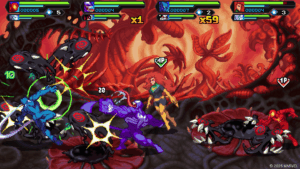
I would be remiss if I didn’t mention the recent mini-revival of the licensed side-scroller. The first Scott Pilgrim beat-em-up appears to have kicked things off, but that has blossomed into wonderful games in the worlds of Teenage Mutant Ninja Turtles (Shredder’s Revenge), Terminator (2D No Fate), Marvel (Cosmic Invasion), and probably others I’m forgetting.
Is this a mini revival or simply some highly targeted nostalgia pulling? Time will tell, but I’m definitely enjoying it while it’s here.
Where Does This Leave Us?
Having fun with these nostalgia-tinged games, made specifically for people like me, as they release has been a good time, but where do I find more?
Somewhat expectedly, the result of my new(re)found love of arcade games has led me straight back to their ‘90s heyday. Yes, I’ll continue to check in on new things released in this space, but those are few and far between. In the meantime, my Super Nintendo and early PlayStation libraries have been my source of entertainment on this front.
Super Nintendo is built on games like this. Super Punch-Out is a go-to for me. Have five free minutes? Beat up Gabby Jay and Bear Hugger! Have an hour? Get crushed by literally anyone past the first circuit a bunch and hopefully learn enough to eventually beat them.
Shmups are also a great source of pure, arcade goodness. These games are usually quite difficult but play out over relatively short levels that you can attempt to master enough to get a little further next time through. While the price of many of the original copies can be prohibitive, there are cheaper options on the SNES, and a few available on the SNES service in Nintendo Switch Online, including Star Fox. Also, you know, Team Play Any Way You Can is always an option.
Racing games and the arcade sports games of the era also hold up quite well. I’ll play Biker Mice From Mars or Wayne Gretzky’s 3D Hockey… anytime!
The early-to-mid 90s was, arguably, the golden age for the “home console games which had arcade vibes but still hold up well today.” An extremely niche category for sure, but one of high interest to me.
Back To Value
I told you we’d get back to the question of value. How does a game like Star Fox on Switch 2 justify a $60 price tag? The answer naturally centers on your definition of value, but I’ll begin by justifying it based on the earlier definition I’m not a fan of.
I have made somewhere in the range of 6-10 full runs through Star Fox since purchasing the game. These probably average around 90 minutes apiece which instantly lands me in the 10-14 hour range simply based on playing the core game a handful of times. Add in a roughly equal amount of time going through the challenge mode and I’m easily over 20 hours into this “short” game. I paid $60 for it (note that the digital version is $50). I also paid $60 for Pragmata, a new AAA story-based single player game also from 2026. I spent about 15 hours in Pragmata.
Do any of those stats make one game better than the other? Certainly not. Do they make one game a better value than the other? Again, no.
My main issue with the prevailing definition of value is that it considers games a one-time experience. Many, the vast majority even, are one-time experiences for me. I keep a large backlog of older games, but I am quick to toss them in the trade pile after playing them unless they are personal all-timers. The ones that aren’t one-time experiences, though, are special.
If I weren’t to play another second of Star Fox for the next year starting now, does that mean it was a 20 hour experience for me? Chalk it up as a three dollar per hour value and rank that against other games? That seems kind of silly.
There is an intangible value in a game that I could pop it for five minutes or two hours and have a blast with. In cases like these, where I don’t want to commit to starting or continuing a longer experience, an arcade game in this style holds more value than an 80 hour JRPG.
Basically, how do you measure the value of something that can sit in your collection for years and bring dozens of separate short bursts of joy if “time divided by dollars” is the only metric you use?
That’s the issue for me. I get very excited while I’m playing a game that I know will be one I can return to over and over again across the years. It hits differently for me and it absolutely something a good arcade game is constructed to do in a way that longer single player experiences aren’t.
What Does It All Mean?
Arcade games are fun. They should be celebrated for what they offer instead of criticized for some value metric that can’t quite capture all that is wonderful about popping in a Super Nintendo cartridge for the sole purpose of a 5 minute session of failing to get to the water section of Super Ghouls ‘n Ghosts for the 2,382nd time.
Longer games are awesome too, many of my favorites clock in at dozens of hours long, but recently I’ve been reminded of the fun to be had in shorter, arcade-inspired bursts. Call it getting old or nostalgia winning out, but I’m finding myself more drawn to games with short playtimes and high enough fun factors to make me want to experience them all over again even after seeing everything the game has to offer.
Seeing Nintendo bringing back Star Fox for a 90 minute adventure brought all of this to a head for me. I’ve continued to return to it over other, more traditional story-based games despite having played every level a dozen or more times by now. That repetition, and the improvement that goes along with it, scratches a different part of my video game brain than a traditional single-player game does.
Call it nostalgia if you wish, but I’m going to lean into this and have a blast playing arcade games new and old.


Leave a Reply