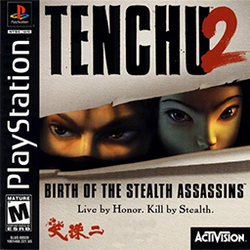
The stealth assassins are back, killing their way to justice once again!
What Is It? Tenchu 2: Birth of the Stealth Assassins is an action stealth game released by Activision on the original PlayStation in 2000. The game serves as a prequel to the prior game, telling the story of how Rikimaru and Ayame came to be master assassins.
Each of the two assassins are playable through the same set of ten levels, provided you have beaten the previous level with that assassin. The ideal way to play is alternating between the two, allowing you to see everything. Completing both of those will unlock an extra, smaller set of missions to complete the story. It’s a fun way to add some additional replay value, but you can also get most of the fun by playing through the game once.
The game plays nearly identically to the original. You are placed just outside a village, mountain pass, inside a temple, or some other Japanese setting of the era. The goal is to reach a point on the other side of the map to trigger a boss fight and move on. Along the way you must use your best assassin skills and items to take down guards. There is no penalty to being seen outside of your rating given at the end of each level.
You’ll prefer staying hidden and sneaking up for silent, one-hit kills as often as possible primarily because the combat in this game is rough. More details below, but the tank controls the game features, paired with the lack of something like a targeting/locking system leaves direct combat in a rough state. This, unfortunately, makes the boss fights feel like a dice roll of hoping not to get caught in a corner or facing the wrong way.
To navigate levels you will be given a few different items/gadgets to use. The grapple hook will be a staple as it allows you to get on top of roofs and move between them. The game will place archers on roofs to make sure this isn’t overpowered, but sticking to the high ground is often a sensible strategy in this game. Beyond that, you’ll get healing potions, throwing stars, bombs, and other items. Pick which you want to bring with you from the start of the level, and loot fallen enemies for more, then use them wisely.
The most noticeable difference between this and the original is in the overall visual quality. The developers really learned how to leverage the hardware to produce something that looks this much better than the first. The game still has issues where the draw distance will keep an enemy just out of sight, but a forgiving alert/awareness system makes that mostly a moot point.
Most of the ten levels can be beaten well under ten minutes, but each level also took me a few tries. My typical pattern involved figuring out where the boss was, then dying a few times before finally beating them. All told, a single playthrough with one assassin will probably take somewhere in the 5-7 hour range for most people.
The game also features a Mission Editor mode which, if nothing else, takes up an inordinate amount of the pages of the instruction manual. You can set up the terrain, enemies, and mission goals in custom levels or edit existing ones. This seems like a perfect feature for kids of a certain age wanting to test their siblings or friends who were also big into the assassin life.
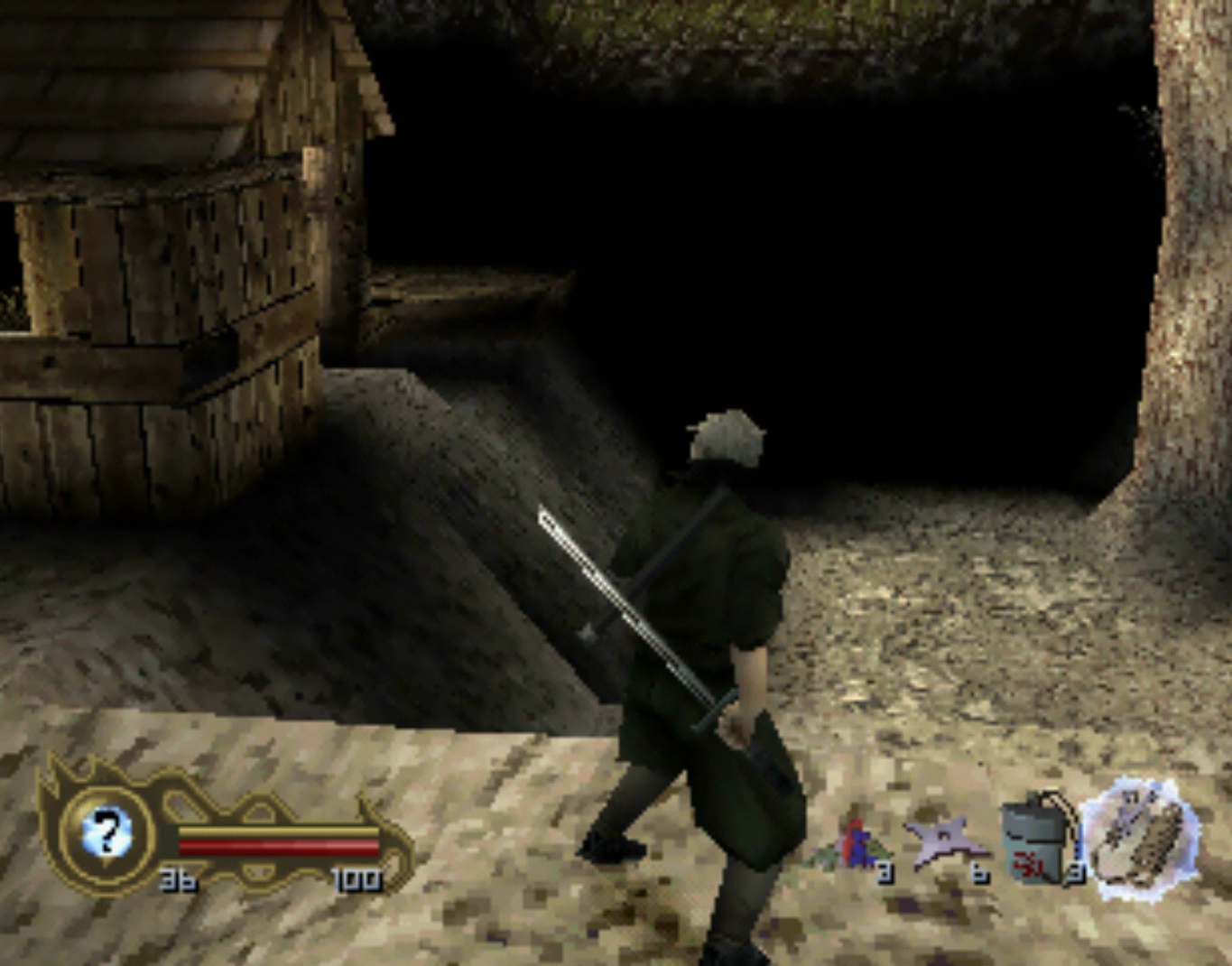
The Best Part: The stealth aspects. The game gives options for how to play stealthily. You can sneak by enemies by sticking to rooftops or underwater, or you can try to take out as many enemies as you can quietly. The brand of stealth here is far from revolutionary: you will spend a lot of time getting just to the edge of an enemy’s sight radius, wait for them to turn around, then run behind them and slash their throats. As you inevitably replay levels, you will learn the positions of enemies and be able to fly through to the boss fight after a few tries. What it lacks in originality it makes up for in being a satisfying, if incredibly straightforward, stealth combat experience.
The Worst Part: The combat. It is painful when you have to draw your sword against an attacking enemy. Pressing down will block but it also moves you backwards which is awkward and often leaves you too far away to strike once the enemy’s attack is finished. The worst part is when you get turned around or stuck. Despite having different roll and turn options, the tank controls absolutely fall apart in tight situations and you’ll certainly take some big hits before reorienting your assassin. The combat when you are directly in front of an enemy is perfectly fine, but getting there is sometimes tricky. The simplest fix would have been a target lock system to keep you facing the opponent, but alas, you are stuck with the limitations on this one.
I will caveat this complaint by saying that, by the time I was fighting the final boss for the tenth time, I did start to feel like I was having a better time with the direct combat. It was far from perfect, and one wrong move would leave you facing the wrong way and half of your health would get taken from a few hits, but when fighting one-on-one in open spaces, I was able to find a small bit of fun in that experience.
The Verdict: Tenchu 2: Birth of the Stealth Assassins is a fun game which features tank controls that mostly fall apart when you get into tight spots with the need for rapid movement. This is true for many, many PS1 games. This game actually allows analog controls but they were so bad I turned them off and opted for the d-pad tank variant instead.
If you had fun with the original Tenchu anytime recently, Tenchu 2 is an easy game to recommend. If you’re interested in some PS1, tank-control, stealth fun, Tenchu 2 (and 1) are both good times. If you are anyone in the remaining 99.3% of the population, Tenchu 2 is hardly essential.
Personally, I had a very good time, much like I did with the original earlier this year.
How to Play: PlayStation 1*
*console played on for this review
Leave a Reply