Ink hordes of monsters in Nintendo’s latest take on the looter shooter.
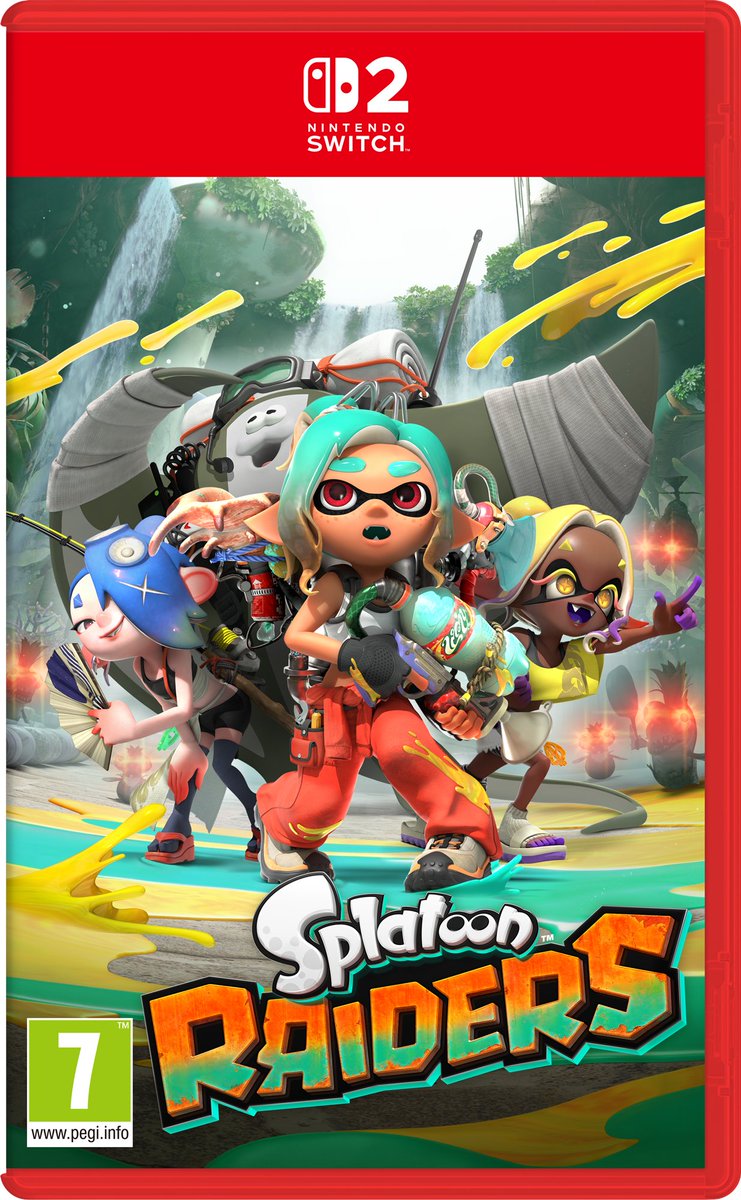
What Is It? Splatoon Raiders is a 2026 a third person looter shooter from Nintendo, released on the Switch 2. The game is a spin-off of the numbered Splatoon games which are known for their online play. Raiders picks up the single player mode those games have and expands it into an entire game. An important bit of context around this review is that I’d never played a Splatoon game before this one.
Raiders has you taking the role of “The Mechanic” after a crash landing leaves you on a mysterious island. Your three pals, two other squid-like people and a ray of some sort, view you as a bit of an outsider but are happy to accept your aid in trying to uncover the mysteries of the islands across the world you are stuck on.
The game is a third person looter shooter. Each level/raid is relatively small, ranging from a minute or two up to, maybe, five to seven for the longer stages. You are armed with an ink gun and need to mow down hordes of enemies as they attack. Doing so will allow you to pick up power eggs which charge up a special attack from whichever companion you have with you. You will also pick up spirhalite shards which are used at your base to upgrade or construct new items. You can also directly find new weapons and gadget attachments during these raids. Anything you collect will be carried into the hub world, even if you die before completing the raid.
The combat in the game takes center stage and it absolutely shines. The enemies will come in waves, the shape of which varies with the type of raid, and crowd control is the most pressing concern for the toughest parts of the game. After unlocking some things, you will eventually get a few different gadgets to attach to three different tank types. Combine this with about a dozen different types of weapons, most of which having sub-types within them, your choice of buddy and their showstopper ability, and you can truly play this game how you want.
As with prior Splatoon games, you will need to dive into ink on the ground in order to refill your tank so you can fire more ink. This is a core aspect of the game and adds another dimension to the fights. You need to ensure you have an area to recharge in, and it often needs to double as an escape route when the stronger enemies get too close. It is a seemingly small, strange way to refill weapons, but it ends up being one of the most unique aspects of the moment-to-moment gameplay.
There are a few different basic level setups but the main ones mostly boil down to two different types. First, a series of levels where you are given a time limit to collect a certain amount of power eggs that are dropped by each defeated enemy. Second, an open area with a bunch of shard mines you need to traverse to and mine while collecting enough power eggs to mine the level’s main shard vein. There are variations on this theme, including boss fights, but that covers the majority of the game.
The game offers co-op, online or via local wireless. There are options in the game for asking the community for help, which will try to find someone to help you with a specific raid, and for being the helper. This is a nice touch and can be extremely helpful as some of the levels here are fairly difficult.
The upside with the difficult levels is that you will constantly be earning new gear and working towards leveling up, even when you get crushed by a tough raid. My son and I played the first part of the game in parallel. There is a very early level which I absolutely could not beat. He beat it fairly easily because he happened to get a higher level weapon drop than I had available. I simply kept trying, and cleared other levels, until I was leveled up enough and had a strong enough weapon to overcome the difficult raid. None of this is groundbreaking in the world of video game difficulty, but it does strike a very nice balance of providing legitimately difficult challenges while also ensuring that anything you do in the game, pass or fail, will work towards making your character more powerful.
I spent somewhere in the 10-15 hour range before hitting the credits. Early on, the game introduced a “play the same levels, but with added difficulty” concept which kept me hooked longer than expected. Each difficulty on each level comes with a recommended player level, letting you know if you are terribly underpowered for something before diving in. You can then choose to go back and play different areas to level up, or dive into the hard one and see what happens.
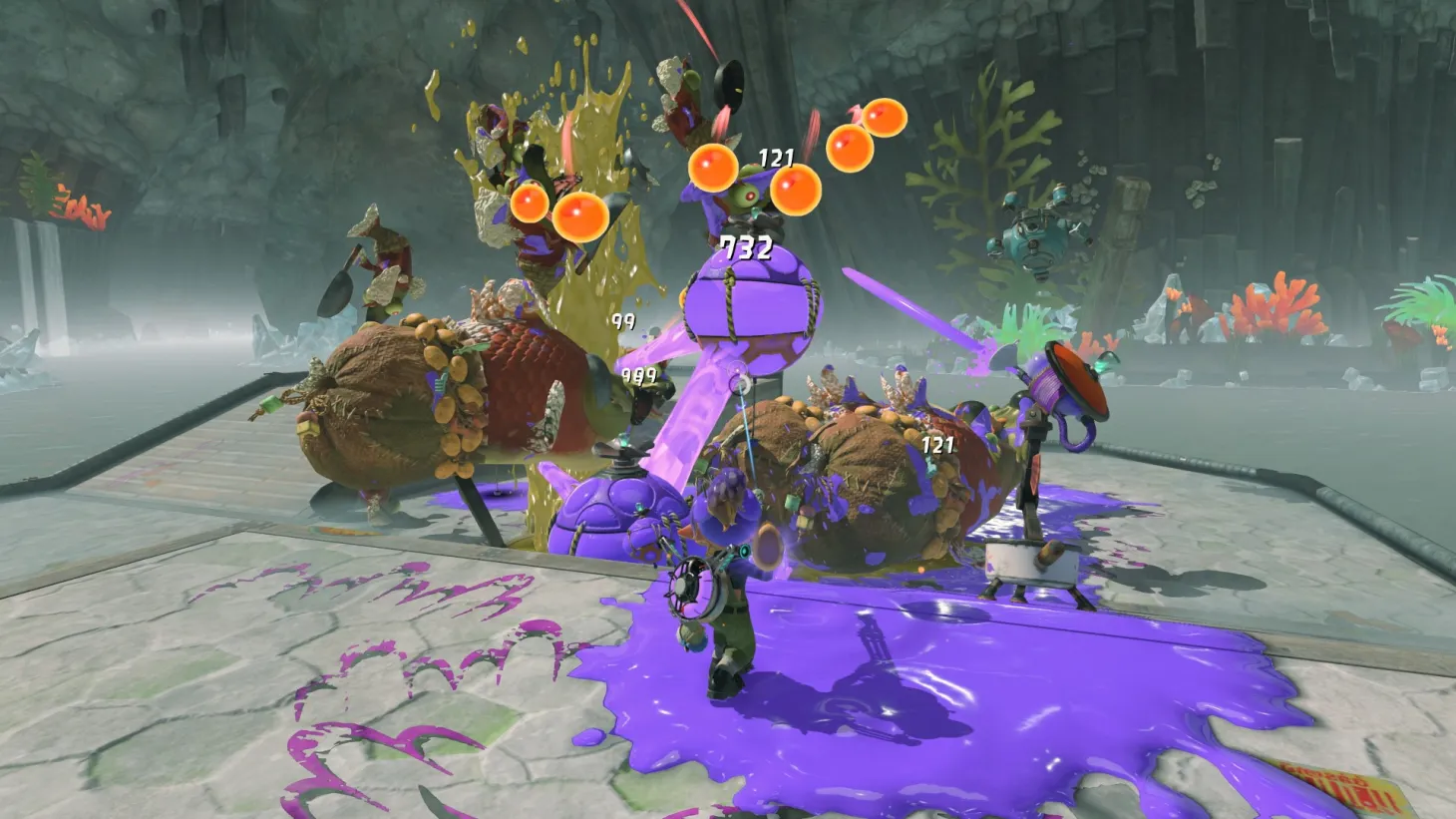
The Best Part: The loadout customization. There isn’t enough space here to explain it all, but I will run down the loadout I ended up using by the end of the game. I had a high-level all-purpose gun as my primary weapon. It didn’t deal the most damage, but it was a good short/medium range option that kept the ink blasting. I used the speed tank to prioritize my ability to get around quickly and avoid getting absolutely smashed at a moment’s notice. I preferred Frye’s showstopper as it had a large area of effect and was powerful. I equipped three gadgets which mixed passive attacks, strong one-time attacks, and a quick escape move. I was able to move quickly, blast away, reposition myself easily, and generally whisk across the level and avoid taking big damage. That was the plan, anyway. You can opt for more of a tank-like setup or to rely on powerful, autonomous gadgets to help your cause.
The weapon variety is absolutely wild, ranging from true melee paintbrushes to sniper-style rifles and literal buckets of paint. Maybe my favorite part of this was running into some really tough spots late in the game and being able to recognize that I had the wrong loadout, adjust after a defeat, and go back in with a better setup and have a good chance at winning. All of this learning came naturally while playing, the game never beats you over the head with the intricacies around the different types of loadouts. It’s a very satisfying curve for what appears to be a pretty simple third person shooter.
The Worst Part: I was ready to be done with the game when I hit the credits. The game features a vast amount of postgame content which ranges from simply amplifying difficulty on all levels to completely new content. I dabbled in this a bit to see what it was all about, but I was not drawn in enough to stick around for too long. This is, of course, just fine. I had a great time with the base game, but the underlying point here is that the lack of variety among the basic level structure really wore thin for me by the time I rolled the credits. I think another basic level type would have gone a long way.
The Verdict: Splatoon Raiders surprised me in a few different ways. I hadn’t played the series before so it was clearly never something that drew me in, and I hadn’t ever found a looter shooter I liked. The concept of slashing monsters with ink in this Nintendo-ified third person shooter which looks like a wonderful cartoon was appealing, but never enough to actually jump in before now. I liked what I found.
The game was deeper and more customizable than I had anticipated. Given how differently the game plays based on your loadout, it was great to see that certain levels lean into different enemy types which can easily negate a preferred setup. This didn’t happen more than a few times, but it was still fun to see the game challenging and pushing me a bit to understand the different styles and their natural strengths and weaknesses. This was a level of depth I didn’t expect from a cartoon shooter from Nintendo, although I probably should have given how well they have Nintendo-ized complicated genres in the past.
On the looter shooter front, I had tried a few others and been almost instantly turned off by the unexplained currency/crafting systems they employ. Splatoon streamlines that considerably by only including a few different currency types with the most basic shards being enough to do most of the basic crafting/upgrading you’ll want. The menus are simple and clear, with the costs and benefits made obvious. Again, nothing groundbreaking, but a simple, intuitive UX wrapping a game that constantly gives you rewards for simply playing adds up to an extremely satisfying experience, even for someone like me who doesn’t have much interest in the looter shooter gameplay loop.
Splatoon Raiders is another wonderfully fun game from Nintendo which can be enjoyed in short bursts. I had a great time with it, but I also got a bit tired of it if I stretched a single play session out much longer than an hour or so. The small level structure is extremely satisfying, but the repetitive nature holds the “one more try” mentality in check a bit. Overall, the game hooked me way more than I had anticipated and is certainly worth checking out, even if you’re not a fan of the typical looter shooter gameplay loop.
How to Play: Switch 2*
*console played on for this review
Leave a Reply