
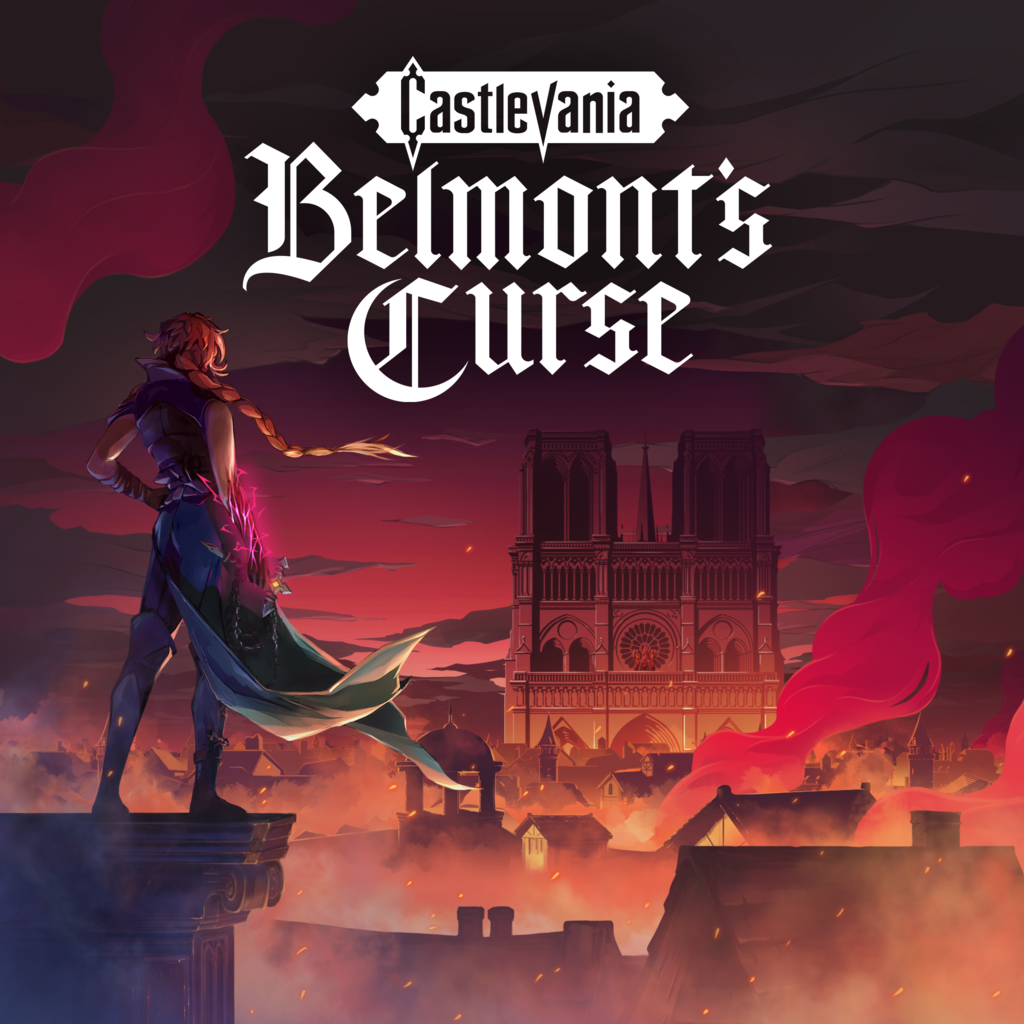
Does the first 2D Castlevania game in many, many years deliver?
What Is It? Castlevania Belmont’s Curse is a 2026 action-platformer release from Konimi, developed by Evil Empire games. The game places you in the shoes of Rose Belmont who is called to a Paris in flames along with her father Trevor a little over 20 years after the events of Curse of Darkness.
As you might expect, Rose finds Dracula is, once again, up to no good and wants to take over everything. Rose sets off on an adventure that will take her to the places you probably expect as she attempts to take down Dracula and learn about her family along the way.
The game is a classic Metroidvania style, meaning you will start with access to a small area of the massive map and gain new abilities which allow you to explore more of the map and progress in the game. I like to break down the formula into three parts: exploration, platforming, and combat.
Exploration is typically my least favorite aspect of the genre as I tend to find myself favoring games with clear map markers as to where I need to go next. Belmont’s Curse doesn’t do anything like that, but I still found myself enjoying running through the world to figure out what I missed. There are secrets almost everywhere and the map often hints at them by showing a bit of a cloud over spots you haven’t figured out how to enter yet. I spent many hours running through the various sections of the game trying to see what powerups I can access after finding a new ability. I unexpectedly found a lot of fun in this aspect and I think it is because some very big areas of the game, as well as important upgrades or weapons, are really well hidden.
On the platforming side, the game relies on a fairly slim moveset for Rose. After some very early upgrades, you will spend the vast majority of the game with the abilities to slide, jump, and grapple onto well-marked grapple/swing points. These are eventually augmented with other abilities, but those are late enough that I’ll leave them for you to discover to avoid spoilers. The game leans heavily on the whip/grapple mechanic. Every platforming-specific section in the game that is hiding the next area, a treasure chest, or something else involves stringing together multiple grapples in conjunction with well-timed jumps, disappearing platforms, moving saws, etc… The good news is that this grapple is executed extremely well. The platforming does not earn any points for variety, but it is built around a strong set of core mechanics and the result is a very good time.
Finally, the combat rounds out the core gameplay aspects. Rose will find weapons across seven types. These include sword, whip, spear, sword and shield, and so on. Many series favorites show up here and each type has four different entries to find in the game, each providing more strength and better special abilities than the last. The weapons do their job in allowing you to play how you’d like. If you are more of a defense first player, you can lean on the built-in parry move then equip a sword+shield to make sure you can blunt most enemy attacks. The whip and spear offer styles which allow you a bit more space, something I leaned heavily on pretty much my entire playthrough.
The most surprising aspect of combat for me was that grapple mechanic I mentioned earlier. When you unlock it, the game adds an “oh, by the way…you can hook onto enemies as well, pulling yourself towards them for a quick attack” message. This seems minor at first, and I spent maybe ten hours ignoring it for the most part, but once the enemies got tougher and more numerous, I found myself learning to love that enemy grapple. It was perfect for a quick escape from a powerful attack and became vital to my combat style.
Rose also gains powerful magic abilities through an old, dusty set of tarot cards her mother left her. With each boss defeated, Rose gains a magical power, most of which offer powerful attacks of some sort. These can be upgraded by completing objectives once you’ve unlocked them. The spells are another way the game lets you customize your combat experience, this aspect is rounded out by allowing three equipables at all times. These do the things you would expect from a game like this such as increase the potency of healing items, increase damage in certain situations, and so on.
I spent 21 hours with the game which got my save file to 93.3%. I left a few things unseen, including the true ending. Many of those hours were spent exploring and trying to get every life and magic upgrade I could find, not to mention seeking out some well-hidden bosses and new weapons. The game won’t ‘wow’ anyone with its visuals, which are understandably similar to Dead Cells (same devs), but they do the job and the overall atmosphere shines through well.
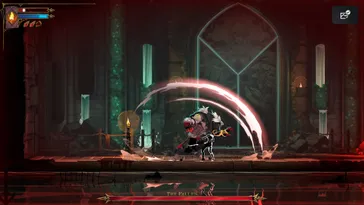
The Best Part: The whip/grapple ability. It sounds minor, and I didn’t think a whole lot of it when it was introduced after beating the first boss in the game. Once you start to master the movements, which you will have to do as the game throws those grapple points in just about every room in the game, it becomes second nature. At that point, you start incorporating it into combat and the whole system starts to shine a bit brighter. The quick-grapple away towards a less threatening foe is as essential as the slide or jump-back Rose has to avoid powerful attacks. That almost every boss fight after the first features these grapple points on the screen tells you a lot about how much the game leans into the mechanic. It’s a good thing it’s so well executed and engaging.
The Worst Part: The enemy variety is pretty poor. There are only a very few basic types: skeleton, big guy in armor, bird-thing, guy with spear, etc… The game iterates with those basic types only slightly (“big guy in armor WITH A SHIELD!”, for example), but you are fighting the same types of enemies from start to finish with only a few exceptions. This isn’t the most heinous offense in the world of videogames, but a bit more creativity in the enemies would have gone a long way. The wonderful, tough, and varied boss fights only shine the light brighter on how repetitive the basic enemies are throughout.
The Verdict: Rebooting a series to its roots after such a long layoff is always a tough challenge. The genre that the series helped invent has hit a stride in the last decade with countless amazing games being released. How do you bring an old favorite into modern times? Well, hiring the team behind Dead Cells, one of the smoothest controlling action-platformers of recent memory, is a great start. They essentially auditioned for this role with the Dead Cells Castlevania expansion, and, unsurprisingly, nailed Belmont’s Curse as many expected they might.
The game doesn’t set out to do anything revolutionary, but it smartly combines key mechanics in fun ways, lets the whole Casltevania-ness of it all shine brightly through odes to the series’s past, and throws some absolutely killer boss fights and platforming sections at you to keep the game fun and challenging from from start to finish.
A small example on the mechanics front. The platforming often relies on the whip/grapple ability and a phase-shift style ability which will allow Rose to either stand/wall-cling to certain blocks or glide right through them if you are holding a trigger button. Having to chain the two together, being mindful of which trigger to pull, when to release, and so on, was a fun puzzle the game featured throughout. Neither of these two mechanics are remotely novel in the genre, but the game combines them in smart, effective ways that made me feel like I hadn’t seen this exact combination of mechanics together in quite this way. That’s one small example out of many in the game, all serving the point that Belmont’s Curse doesn’t set out to redefine anything, it simply picks and chooses from what is out there to create something familiar, unique, and a ton of fun. To put it another way, the game is doing what countless Metroidvanias have been doing for a long time now while pulling from old Castlevania games.
Some things that might potentially turn off players include the length, difficulty, and repetitiveness. To the game’s credit, there are a bunch of difficulty-related options in the menus you can toggle. Things like “respawn right outside of the boss fight” will save you literal hours if you are anything like me and will need upwards of 20 attempts on some of these bosses. I didn’t use this feature and spent 21 hours with the game, falling a few short of seeing the true ending. I was fine with this length because it was a game that didn’t feel nearly as long as the save file said, but that is, objectively, a long time for a Metroidvania and if the game doesn’t quite click with a player as much as it did for me, I could see that being a major issue.
Castlevania Belmont’s Curse is not only a worthy addition to the classic series’ storied history, it is also a worthy addition to the sea of amazing games in the genre the series helped define. There are tips of the cap throughout the game to the series’ history, but an extensive knowledge of the Belmont’s adventures is not required to enjoy Belmont’s Curse. Don’t expect anything revolutionary or genre-defining, but Belmont’s Curse is a fantastic game and one I’m extremely happy we got in 2026.
How to Play: PlayStation 5*, Xbox Series, Switch, PC
*console played on for this review
Leave a Reply