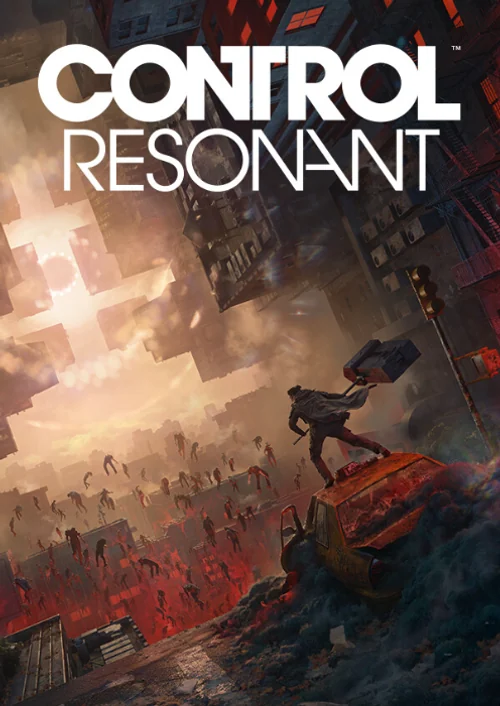
Control is back, as are the Hiss. Can you stop them?
What Is It? Control Resonant is a 2026 action adventure game from Remedy Entertainment, released on PS5, Xbox Series, and PC. The game is a direct sequel to 2019’s Control which saw you controlling Jesse as she searched through the Federal Bureau of Control (FBC) looking for her brother, Dylan. Resonant has you playing as Dylan to search for Jesse, this time outside (and inside, occasionally) of the FBC’s Oldest House and into the streets of New York.
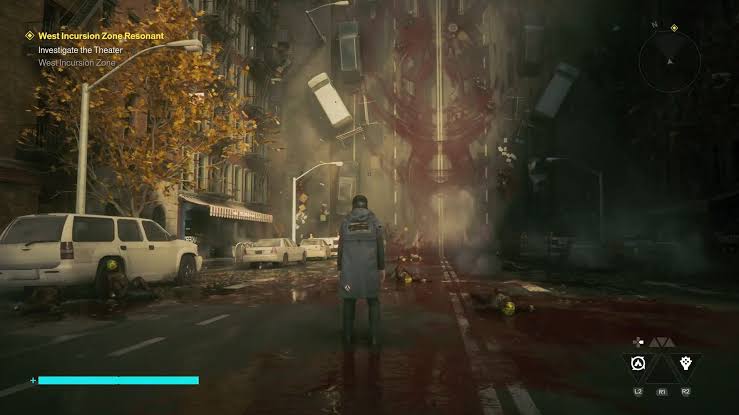
The story in Control was a bit wild, as you would expect from a Remedy game, but Resonant has a very nice “Control Recap” you can view before jumping into the game. It does a surprisingly good job of covering the story the first game threw at players. Resonant’s story is either a bit less confusing or I’m just getting more used to Remedy’s games. Dylan is released from his Oldest House prison under the control of Zoe de Vera, an FBC agent. She holds a “kill switch” to keep Dylan in line as the two learn to trust each other. Dylan’s primary mission is to stop the spread of the Hiss which have escaped into the city and also figure out why Manhattan has started folding over on itself. The latter creates one of the most unique videogame landscapes I can remember as well as an incredibly dangerous jump in probability that you could fall off the face of the earth.
The game is an open world action-adventure game with plenty of skill-tree and equipment upgrading/unlocking. The overall area is small compared to many open-world games, but things are densely packed in this mind-bending version of Manhattan. Although most city blocks have a building or two that you can enter for a quick treasure or small puzzle, Dylan will be spending most of his time outside.
This starts out fairly typical as you traverse through mostly normal looking city blocks, using a double jump to get on top of certain buildings and fighting Hiss along the way. As you track down specific sections while trying to find Jesse, the world will expand as Dylan’s traversal moveset does. The most impactful of his moves is the ability to adjust to the gravity of any given surface. Early in the game you will see some roads which bend upwards, creating a ledge too tall to jump onto. Later, you will be able to hit a button and turn the entire world’s perspective so you simply walk on that bent road as if it were normal. This is a mind-bending moment in the game and one you will need to rely on throughout as the late-game bending will have you thinking “which way is up?” constantly.
The other side of the game is in combat, which is a true melee affair in Control Resonant. You select one of three starting weapons and one of three secondary weapons. I chose a wide-swooping primary weapon and alternated between a couple of different secondaries. One secondary acts like a drill, another like a giant hammer, with each dealing a different damage type which is more useful in specific cases. Advancing in each section of the game will unlock ability points which control a skill tree to access modifiers and advanced moves. You will also learn a handful of abilities at major points in the game. These can be as simple as throwing rubble at enemies all the way to summoning enemies to fight alongside you. The game gives you a massive range of approaches to take and also offers “reset” tokens which you can use to undo all of your choices and start a new build immediately with all of the points/assets you had spent on your prior build.
Actual combat is the biggest mixed bag in the game. Most enemies are absolute hit-sponges and this can be made significantly worse if you defeat bosses too quickly as this will trigger all enemies in the game to respawn at a level higher than they were before. Moment-to-moment combat is mostly dictated by positioning. Larger enemies will often have weak spots that are useful to hit. Building an enemy’s falter meter so you can perform an execution not only sounds cool, but is absolutely vital as the massive, temporary strength boost you get for doing so allows you to quickly take out tougher enemies. On the front of making each combat encounter a fun puzzle to solve, the game mostly succeeds. You need to figure out how to leverage all of your weapons and abilities to fully falter enemies so you can tear through more, quickly.
The downsides of this combat system revolve around the hit-sponginess and the difficulty curves. More on them later, but it will absolutely be the most divisive aspect of the game.
I spent around 30 hours with the game. Being an open-world style game, I could not help but to explore frequently and complete most of the headline side quests, each of which bring a little more lore into the picture. This side questing feels kind of necessary in this game given the difficulty curve, you simply have to level up to stand a chance, but better gamers than myself can probably see the credits in closer to 20 hours.
The game looks great with a Manhattan that is folding on itself being the clear highlight. Enemies are a little repetitive but they get the job done. A special shout-out to the side characters here. Dylan himself is a fairly bland protagonist. This makes sense given his backstory of being raised in a prison cell, but does not make for a lot of fun banter. Zoe, in particular, often carries the game with a great voice performance being backed with some strong writing that sees her taking a predictable, but fun, arc from skeptic to friend. I genuinely think this game would have been significantly worse without Zoe talking in Dylan’s ear most of the time.
The Best Part: The commitment to being extremely weird. Remedy has a reputation for the weird and Control Resonant will do nothing but push that forward. I won’t get into spoiler territory here, but so much of the game is simply strange. There is a homage late in the game that I would not have guessed in 1,000 tries. Also, Manhattan is folded in on itself. You have to fight the urge to eat pieces of mold that have taken over a section of the city. Various FBC agents and citizens are turning up without heads. The list goes on and on. The atmosphere that this game lays down from the start, and leans into for the entire playtime, is undeniably “Remedy.” If you’ve played their other recent games, you will know exactly what this means and that isn’t something I can say about many AAA developers.
The Worst Part: The weird difficulty curve the game offers. I have some issues with early game difficulty, mainly that you can find yourself in some really difficult areas with really frustrating fights if you simply follow a very natural path the game offers once the world opens. My biggest issue, however, is around some of the boss’ difficulties. I spent a long time on one boss fight near the end of the game. It was going through its phases, I was mostly succeeding in dodging and attacking, but after so long, I missed enough times to get killed. I was only about halfway through when this happened. The difficulty wasn’t in the fun phases and their attacks the boss offered, but in needing to repeat the dodges over a long period of time. Luckily, the game lets you customize almost everything around combat. I chose to increase my damage output significantly to get through the fight quicker. You could also decrease incoming damage and many other things. I don’t have any issues with adjusting difficulty to fit my needs, and doing so does not invalidate any trophies/achievements, but this boss was not a fun experience. Much of the combat in the game is a test in seeing how many times you can bash your weapon into an enemy, with even the most common enemies taking a few combos to dispatch, but the late-game bosses took this to an unreasonable level for me.
The Verdict: Control Resonant is a great experience that is held down by some strange decisions around combat and the difficulty scaling. To the game’s credit, it allows you to customize every aspect of combat to get the experience you want, but I generally don’t enjoy having to tune damage sliders to find a fun experience. It’s worth noting here that they released a patch fairly soon after release to nerf at least one notoriously difficult boss. That, combined with the extravagant assortment of difficulty settings, is an open admission that the combat in this game was not going to be for everyone. I would have greatly preferred a better tuning out of the box.
Having said all of that, I am absolutely glad I played through Control Resonant. The awe factor involved in jumping and changing your gravity’s direction with a click of a button is a common trope in 2D games, but rarely in the 3D and rarely pulled off as well as it is here. The atmosphere and the weirdness which slowly builds throughout the game with each new NPC, side quest, area, and story beat you find are really in a class of their own. I could not see anyone except Remedy making this game, and that’s a massive compliment.
Despite my issues with the combat’s difficulty in general, there was a magical run of about fifteen hours (give or take) in the late-middle portion of the game where Dylan’s and the enemy’s levels were perfectly aligned. I knew how to take out certain enemy types quickly, which attack combos would allow me to inflict enough falter to execute certain enemies and then take out the strongest with the temporary stat boost that provided. Gliding through the air in these wild cityscapes, effortlessly switching gravities, hovering long enough to unleash multiple combos on an enemy, and generally wrecking havoc on the Hiss felt amazing. If the game could have provided that type of experience end-to-end, it would easily be in the running for my favorite game of the year. The frustrating bookends the combat in this game provides will likely fade in my memories over time and the good stuff will stand out. Maybe another playthrough will let me reach that sweet spot quicker.
Control Resonant is a truly unique experience. It is a game that only Remedy could make. The folded Manhattan is one of the coolest settings for a videogame I’ve seen in a long time and the way Dylan floats through the world exploring, fighting, and helping restore order is truly something to behold. The downsides I had around the combat were a real shame because combat, of course, is such a large part of the game. It’s difficult to ignore an aspect I had so many issues with when you will be engaging with that system every few minutes, at least. All told, Control Resonant is a game I am absolutely thrilled can exist in the modern gaming landscape and one I am happy to have experienced. Even if it won’t land at the top of my year-end list, there’s a very good chance it offered one of the most unique experiences of the year.
How to Play: PlayStation 5*, Xbox Series, PC
*console played on for this review
Leave a Reply