
I played a lot of video games as a kid in the ‘90s. The vast majority of that time was spent on sports games, Mario games, or whatever the local rental store had in stock when we went after school on Friday. One genre that was not a part of my rotation was RPGs of any type.
That changed in 1997 when, as a magazine-subscribing, PlayStation owner, I simply could not avoid the hype around Final Fantasy VII. It was everywhere. EVERYWHERE. I cobbled together some bucks and bought it, eventually finishing the game. I had a blast. So much so that I chased the genre a bit during the late ‘90s. I tried Star Ocean Second Story, Final Fantasy VIII, Skies of Arcadia, Final Fantasy Tactics, and probably some others I’m forgetting. None of them hit quite as hard and I didn’t actually beat any of them at the time.
Fast forward about 20 years of ignoring JRPGs in favor of sports games and online shooters. I figured it was time to revisit the genre. The games below (except FFVII) are ones that I’ve played in the past 5-7 years and currently make up my favorites.
Criteria
I’m trying to stick to what I consider the JRPG genre. That is: turn-based combat is the focus. I am not including tactical RPGs (sorry, FFT) or first/third person action RPGs (sorry, KOTOR). Why? Because it is my list.
That’s pretty much all, these are simply all of the JRPGs that I love. I am not going to attempt to rank these, but will rather present them in release date order.
The List
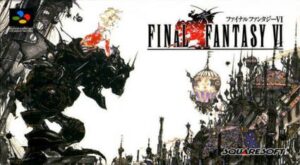
Final Fantasy VI – SNES
There are so many aspects about this game I want to mention, I can’t decide which should be first, let alone which I should not mention for the sake of not writing 1,000 words here. The characters and story are memorable, and Kefka Palazzo is in the very upper echelon of video game antagonists of all time. The game is neatly separated into two parts; one is very linear while the other is completely open-ended. This would have been a great game had it stopped at that halfway mark, but the open-ended parts are amazing. Combat is fairly basic here, but there is a large stable of characters each with their own strengths, you can have a lot of fun combining them. All of this is tied together with some of the best graphics of the 16-bit era. You can tell from the opening scene that you are in for something special with FFVI.
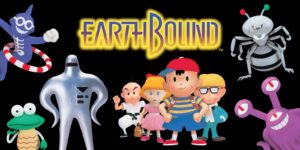
Earthbound – SNES
A remarkable thing about Earthbound is how none of the gameplay is really all that remarkable at all. It has the most basic combat you will find; attack, defend, use magic, or use items. There is almost no customization; find a strong weapon, equip it, and sell the old one. It is purely turn-based, no ATB systems or any sort of twist. The combat is a joy to play as it moves quickly and never feels lacking despite its bare bones nature. What sets Earthbound apart is all of the other stuff. The game is set in a generic western locale, a stark contrast from the typical fantasy setting for many RPGs of the era. The colors pop off of the screen, I will forever have the Earthbound Green grass shade etched in my memory. Finally, the game is silly and wears that aspect with pride. You will find useless objects throughout the game, fight possessed trash cans and fanatical hippies. It’s not an outright funny game, but it’s just offbeat enough to be memorable in the sea of serious RPGs. Wrap this all together and you have a game that is easily more than the sum of its parts.
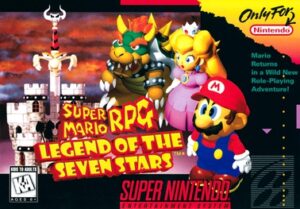
Super Mario RPG Legend of the Seven Stars – SNES
I had no idea I needed turn-based combat with an action/timing element until I played Super Mario RPG. It’s the perfect Mario-ization of a JRPG. All of the turn-based elements are there, but let’s make the player hit a button to deal extra damage and block damage. It’s a perfect addition to the genre, one that I would seek out moving forward (spoiler for some other entries on this list!). Elsewhere, this was a time when Mario was allowed to be a little bit weird. Mallow and Geno are two totally new, completely out of nowhere characters that you actually get to play as in your party. And teaming up with Bowser? Wild times in the Mushroom Kingdom. This game is 95% JRPG but the 5% that pulls in Mario, from the turn-based actions to the light platforming elsewhere) are just enough to make this a perfect blend.
Suikoden – PS1
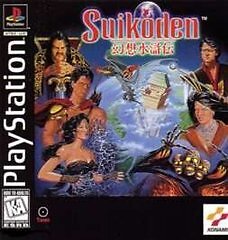
This is my choice over Suikoden II. If I were to make room for one more game on this list, there’s a good chance it might be Suikoden II, but I prefer the first. Had to get that out of the way, most people prefer the second Suikoden as the peak of the series. Anyway, Suikoden is a wonderful game with a fun hook of having 108 unlockable characters. This works out way better than you might expect thanks to some clever XP distribution. Yes, there is a lot of overlap when you have 108 characters, and it can be tough to meaningfully discern differences between some of them when creating your parties, but it’s still a very fun mechanic, not to mention how addicting it can be to try to recruit as many as possible. Elsewhere, the game features typical turn-based combat, but also has two other combat modes: one on one duels and large scale warfare. One on ones occur at key story moments and work well to heighten the tension. The warfare battles are fun strategy sessions. Both leverage a rock-paper-scissor style action selection mechanic that makes things fun and a bit unpredictable. Wrap this all up in a strong story with fun lead characters and solid graphics and you have one of the best JRPGs of an absolutely loaded era.

Final Fantasy VII – PS1
Of course this was going to be on the list. It was my first JRPG experience and stood as the only one I beat for nearly 20 years. There’s not a whole lot to be said here. Is it popular because it is considered good? Or is it considered good because it is so popular? Who knows, but this was an inescapable product in the late 90s and one many people have been trying to replicate since. The characters and story shine with some of the most memorable protagonists, and antagonist, in video game history. Starting out as a simple eco-terrorism operation and growing into a world-saving adventure, as is the Final Fantasy tradition, the game backs up the sprawling story with strong combat, visuals, music, and side quests. Arguably the first JRPG to truly cross into mainstream (its timeline compared to Pokemon and its wildly different Japan/NA release dates complicate things a bit), Final Fantasy VII set a standard that still lingers in the genre today, nearly 30 years after its release.

Sea of Stars – PlayStation 4/5, Xbox One/Series, Nintendo Switch, PC
A deliberate throwback to SNES-era JRPGs, Sea of Stars heavily features a lot of Super Mario RPG, Chrono Trigger, and Final Fantasy IV/VI. The combat features timing-based button presses for attacks and defense (sound familiar?) while the pixel art graphics recall the 16-bit era while having enough modern touch to stand out. This is a fairly straightforward game, no massive curveballs or groundbreaking mechanics, but it picks from its influences so well that the final product manages to feel familiar, but fresh. It is a fine line to walk, and there are certainly plenty of critiques out there explaining why Sea of Stars leaned on its influences a little too heavily, but, for me, Sea of Stars pulls it off.
Metaphor ReFantazio – PlayStation 4/5, Xbox Series, PC
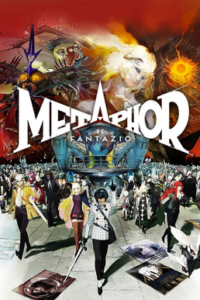
Metaphor ReFantazio adds a fantasy wing to Atlus’s modern JRPG lineup. Following the story of a young outcast and fairy companion, Metaphor deftly juggles an absolutely wild story which is centered around political drama, racism, fascism, and many other topics that hit way too close to home in the modern world. The standout feature for me is the silky smooth combat. It is driven by its Architype system which allows your characters to take on various roles; healer, brawler, sniper, mage, etc… Many familiar tropes, but the game allows you to mix-and-match abilities after a while which will end up with some truly fun combinations. There are also calendar and relationship systems which are a bit daunting for new players but do a nice job of restricting how much you can grind and keeping the already long game nicely paced. Simply put, this is a wonderfully slick JRPG that feels closer to 20 hours than its 65+ hour runtime. Full review here.
Clair Obscur: Expedition 33
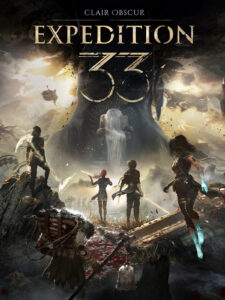
If you’ve been paying attention, you’ve probably realized that turn-based combat with a touch of action/timed button presses is something I really enjoy. Enter Expedition 33 which takes this small mechanic to an almost Souls-like level. You will do this while attacking, but the stakes are fairly small and the timing windows fairly forgiving. The defensive moves, however, are a different story. You can choose to parry or dodge, parrying having a much smaller window but coming with the reward of a counterattack. Both are tough as every enemy attacks in a series of moves, forcing you to learn the patterns (often through a few deaths) before getting good enough to survive the fight. I was surprised at how difficult it was and at how much I enjoyed the challenge. Combat is rounded out with unique characters, a great MP-like system, and fun enemies. Elsewhere, the story is gripping and takes some unexpected turns. The game looks great, with a special shout out to the overworld traversal visual effects. The game also features an open-ended section where you can side quest as long as you want or simply move onto the next story event. Unique combat, a great story told wonderfully through great performances and writing, strong graphics, and an unexpected difficulty all add up to one of my favorite new video games in years. Expedition 33 definitely deserves a spot on my list. Full review here.
Leave a Reply