
SquareSoft’s swansong to the original PlayStation, Final Fantasy IX takes the series back to its fantasy roots and stands as one of the best entries in the long running series.
What Is It? Final Fantasy IX was released in 2000, right around the time that the PlayStation 2 landed in the US. IX was the last new release for SquareSoft on the PlayStation 1. Square’s run on PS1 is a thing of legend: deftly switching between genres and graphic styles at an absurd pace. FFIX acts a bit as a celebration of that magical run by drawing from Square games over the period.
On the surface, IX is a return to form for the Final Fantasy series. Not that VIII was bad, but IX ditches the futuristic setting seen in VII and VIII in favor of a more traditional fantasy setting. The game also ditches some of the complicated, divisive combat mechanics VIII introduced in favor of a fairly simple system that still shines.
The main character is Zidane, a common thief running with a gang who was hired to kidnap a princess from her castle. In a fun twist, you quickly learn that the princess wants to be kidnapped so she happily obliges. With that, the adventure begins and grows from a simple kidnapping into a high stakes, save-the-world story as you would expect from the series.
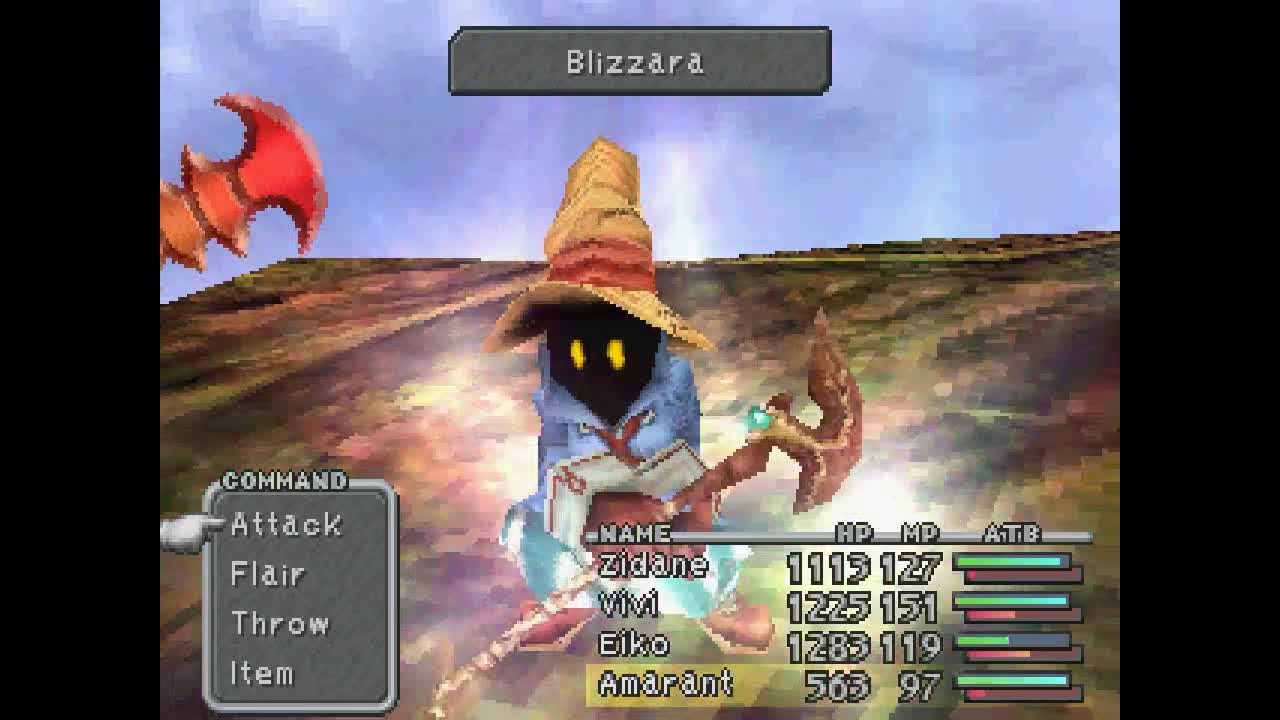
The adventure will bring a variety of characters into your crew, and these are easily a highlight of the game. Zidane is, for most of the game, a typical bratty teenage-ish protagonist that is often the worst part of the crew. Vivi is a black mage who spends the game trying to figure out who, or what, he is. Steiner is a duty-first soldier who stubbornly grows as the crew does. There are many more, some better than others, but all of the characters here are memorable and are augmented with their own battle strengths.
Speaking of battle, the combat here is fairly bare bones. The biggest area for customization comes through learning abilities which is done by equipping different items/weapons and earning AP to unlock the item’s abilities permanently. Deciding which abilities to equip will shape your characters and therefore your fights. The summoner characters can learn new summons by equipping various stones for a while, other characters can learn Counter, Auto-Potion, Auto-Regen, etc… Many of the same, comfy Final Fantasy tropes are there to be learned, you get to decide who will learn what. This adds a nice wrinkle to the standard “stronger sword, must equip” outfitting. You will often find a stronger weapon or piece of armor but want to keep the weaker one equipped until you’ve learned a key ability it offers.
Fights are basic and fun, the Active Time Battle system is here as you would expect. The enemies often are large and require a ton of hits to take down, with each new area upping the difficulty a bit to give a nice sense of progression. Bosses often have some affinity towards certain types of attacks, and you can probably steamroll many of them with some advanced knowledge and proper equipment, but for the most part are fair, fun, gimmick-free fights. Some of the bosses in the final stretch buck this trend a bit, and I’ve heard many of the side quest bosses are extremely difficult, so there are some extra tough spots for those looking for them.
The graphical style is nice, a bit of a less oval-y take on FFVII. Pre-rendered backgrounds always look good, some of the scenes in this game were the best non-CGI visuals I’ve seen in PlayStation games. The CGI cutscenes are appropriately over the top and the main reason this game stretches across four discs. My playtime landed at about 45 hours. I did not do any of the major side quests in the game, but did spend time grinding levels on multiple occasions.
The Best Part: The characters and their stories. Some of them are true oddballs, looking at you Quina, but each of them offers fun gameplay mechanics, an interesting story, or both. I made sure to spend time leveling up throughout the game so I didn’t run into any brick wall fights late, and I enjoyed the variety that the characters offered as I rotated my four-person party. The story is the typical Final Fantasy trope of starting with a relatively small concern which quickly grows into saving the entire planet, but it is carried by the individual stories the characters experience over the course of the game.
The Worst Part: The in-game card game; Tetra Master. I actually liked this initially, but quickly found that I could win mostly by luck as long as my cards were on a similar level as my opponents. I eventually stopped playing which is a pretty good sign this didn’t land with me. I won’t go into the details, but I will give credit for Tetra Master being fairly simple to pick up, but I didn’t get hooked enough to stick around for very long once it is available to play.
The Verdict: Final Fantasy IX does a wonderful job of conjuring memories of what the Final Fantasy series does best while adding enough of its own unique twists on the formula to elevate above simply being a “greatest hits” style rehash. The playable characters are up there among the most memorable in the series and strong stories back them up. The antagonists may not be s-tier in the Final Fantasy world, but they are fun and evil enough. The gameplay doesn’t overwhelm you with customization options, but has enough to fine tune your characters towards certain play styles.
Final Fantasy IX is a fitting swansong for both the PlayStation 1 and the incredible run SquareSoft was in that era. It walks the line of pulling on familiar, nostalgic threads while being unique enough to stand on its own. Final Fantasy IX is a worthy farewell to the era and one of the best Final Fantasy games of all time.
How to Play: PlayStation 1*,3, 4, Xbox One, Switch, PC, Mobile
*console played on for this review
Leave a Reply